Looking to keep your indoor air fresh and clean? UV air sterilizers are a great way to zap germs, allergens, and other nasty stuff floating around in your space. These devices work quietly in the background, giving you peace of mind and a healthier home without any hassle.
UV Air Sterilizers
Keep your indoor air fresh and clean with powerful UV air sterilizers that eliminate harmful germs and allergens
Product List
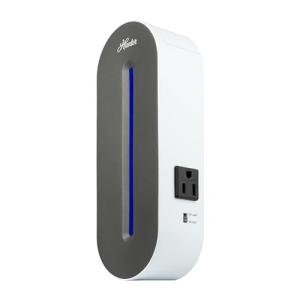
What Is a UV Air Sterilizer?
A UV air sterilizer is a device that uses ultraviolet light — specifically UV-C radiation in the 200–280 nanometer wavelength range — to neutralize airborne pathogens as air passes through it. When microorganisms are exposed to UV-C light, the radiation penetrates their cell walls and damages their DNA or RNA, preventing them from replicating. A pathogen that can't replicate can't make you sick.
This isn't new technology. Hospitals, laboratories, water treatment facilities, and food processing plants have relied on UV germicidal irradiation (UVGI) for decades. What's changed is that this clinical-grade approach is now available in compact, affordable units designed for homes, offices, schools, and commercial spaces across the United States.
Most modern UV air sterilizers combine UV-C technology with at least one other filtration stage — typically a HEPA filter, activated carbon layer, or both — to address the full spectrum of indoor air quality concerns: biological pathogens, particulate matter, and chemical pollutants.
How UV-C Light Actually Works
Understanding the science helps you make a smarter purchase decision.
UV light spans three ranges: UV-A (315–400 nm), UV-B (280–315 nm), and UV-C (100–280 nm). UV-C is the germicidal workhorse. It's the range most effective at disrupting the nucleic acids in microorganisms.
When a bacteria cell or virus particle passes through the UV-C chamber inside the sterilizer, the light energy causes adjacent thymine bases in the organism's DNA to bond together in a way that blocks normal replication. For viruses, the process disrupts the RNA strand in a similar fashion. Either way, the organism is rendered biologically inert — it can no longer infect a host cell.
The effectiveness of this process depends on two key variables: UV-C intensity (measured in microwatts per square centimeter, or µW/cm²) and exposure time (how long the air dwells in the UV zone). A unit that moves air too quickly through a weak UV lamp won't deliver meaningful germicidal effect. Quality manufacturers publish their UV dosage ratings — always look for this spec.
Types of UV Air Sterilizers
Not all UV air sterilizers are built the same way. Here's a breakdown of the main configurations you'll find in the US market:
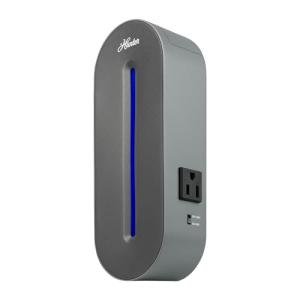
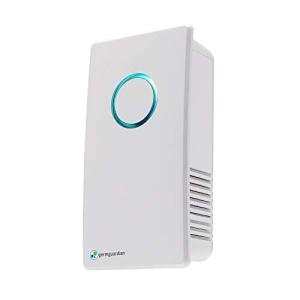
Standalone UV-C Air Purifiers These are freestanding units that combine UV-C sterilization with HEPA and/or activated carbon filtration. Air is drawn in by a fan, passes through the filter stages, gets exposed to the UV-C lamp, and exits as cleaned air. These are the most popular choice for residential use and are ideal for bedrooms, living rooms, and home offices.
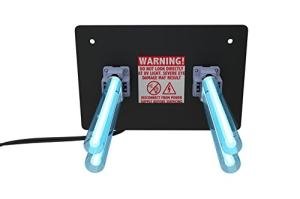
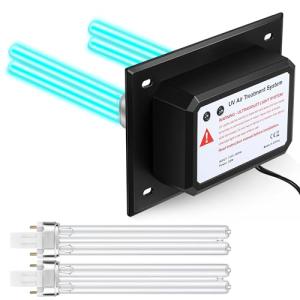
In-Duct UV Systems Installed directly inside your HVAC system, these units sterilize air as it circulates through your entire home. They're more expensive and require professional installation, but they treat the full volume of air in your house rather than just one room. A solid investment for homeowners who want whole-home coverage.
UV-C Wand and Portable Devices Smaller, handheld units primarily designed for surface sterilization rather than air treatment. Some emit UV-C light broadly to treat small enclosed spaces. These have more limited airflow capacity and are best used as supplements to a larger unit, not as primary air sterilizers.
Commercial and Industrial UV Air Systems High-capacity units designed for large spaces — healthcare waiting rooms, gyms, retail floors, classrooms, and open-plan offices. These typically feature more powerful UV-C lamps, higher CFM (cubic feet per minute) ratings, and may include multi-stage filtration systems.
Key Features to Look For
Shopping for a UV air sterilizer means evaluating several specs that directly affect performance. Here's what matters:
CADR Rating Clean Air Delivery Rate measures how quickly a unit can clean a given volume of air. Measured in cubic feet per minute (CFM), a higher CADR means faster air cleaning. The Association of Home Appliance Manufacturers (AHAM) recommends matching your CADR to at least two-thirds of your room's square footage. For a 300 sq ft room, you want a CADR of at least 200.
UV-C Lamp Wattage and Dosage More wattage isn't automatically better — what matters is the UV dose delivered to pathogens. Look for manufacturers that publish germicidal efficacy data or third-party lab testing. Units that achieve 99.9% inactivation of common airborne pathogens at rated airflow are the standard to aim for.
Filtration Stages A UV-C lamp alone doesn't remove particles — it sterilizes biological agents. For complete air cleaning, you want:
- A pre-filter to capture large particles and extend the life of finer filters
- A true HEPA filter (H13 or H14 grade) to capture particles down to 0.3 microns
- An activated carbon filter to adsorb odors, VOCs, and chemical pollutants
- UV-C sterilization to neutralize bacteria, viruses, and mold spores
Room Coverage Area Manufacturers list coverage in square feet based on standard 8-foot ceilings. If your ceilings are higher, or if your space has unusual airflow patterns, factor that into your selection.
Air Changes Per Hour (ACH) This tells you how many times the unit can cycle the full air volume of a room in one hour. For general home use, 4–5 ACH is good. For high-risk environments — allergy sufferers, immunocompromised individuals, healthcare settings — aim for 6 ACH or higher.
Noise Level Measured in decibels (dB), noise level matters especially for bedroom and office use. Units under 30 dB on low settings are generally considered quiet enough for sleep. Check that the unit's maximum speed stays within a tolerable range for daytime use.
Filter Replacement Costs The unit purchase price is only part of the total cost of ownership. UV-C lamps typically need replacement every 8,000–12,000 hours. HEPA filters last 6–18 months depending on air quality and usage. Factor these ongoing costs into your budget.
Who Benefits Most From UV Air Sterilizers?
UV air sterilizers aren't just for people with health concerns — though they absolutely deliver significant benefits in those cases. Here's who stands to gain the most:
Allergy and Asthma Sufferers — Airborne mold spores, pollen, pet dander, and dust mite particles are constant triggers. Multi-stage units with HEPA filtration plus UV-C sterilization catch particles and neutralize mold, providing meaningful relief.
Households with Young Children or Elderly Family Members — Immune systems at either end of the age spectrum are more vulnerable. A UV air sterilizer adds a meaningful layer of protection against seasonal illness spread within the home.
Pet Owners — Pets introduce dander, hair, and odor into indoor air year-round. Units with activated carbon filtration combined with UV-C treatment address both the particle load and biological contamination that comes with living alongside animals.
Home Office and Remote Workers — Spending 8+ hours a day breathing recycled indoor air is a reality for millions of Americans. A quality UV air sterilizer improves cognitive clarity and reduces sick days — benefits that have genuine productivity value.
Commercial Spaces — Gyms, salons, dental offices, medical waiting rooms, and retail environments have a duty to provide clean air to staff and customers. Commercial-grade UV air sterilizers help meet that obligation while visibly demonstrating a commitment to health and safety.
Anyone During Cold and Flu Season — The US indoor environment in winter — tightly sealed, low humidity, heavy occupancy — is ideal for airborne pathogen transmission. Running a UV air sterilizer during peak illness season is one of the most practical preventative measures available.
UV Air Sterilizers vs. Standard Air Purifiers
Here's the honest comparison. A standard HEPA air purifier does one thing exceptionally well: it captures particles. That includes many biological agents. But capturing a live virus or bacteria particle in a filter is different from destroying it.
In a standard air purifier, biological contaminants remain viable on the filter medium. They can potentially re-aerosolize under certain conditions. A UV-C sterilizer stage eliminates that concern — the organism is rendered inactive before it ever reaches the filter or exits the unit.
The tradeoff is cost. UV air sterilizers are generally more expensive than comparable HEPA-only units, and they have the added maintenance requirement of UV lamp replacement. For most households, the extra protection is worth the additional investment.
Safety and Certifications to Look For
In the United States, reputable UV air sterilizers carry certifications from recognized testing bodies. These are the marks that matter:
- UL Listed — Electrical safety certification from Underwriters Laboratories
- Energy Star Certified — Meets EPA energy efficiency guidelines
- AHAM Verified — Confirms CADR ratings are independently tested
- CARB Compliant — Confirms the unit doesn't emit harmful levels of ozone (important for UV and ionizing technologies)
One critical note: UV-C lamps are fully contained inside reputable units. You should never be directly exposed to UV-C light — it can damage eyes and skin. Look for units with shielded UV chambers and safety interlocks that shut off the lamp when the unit is opened.
Also be aware that some older or cheaper UV-based air products generate ozone as a byproduct. Ozone irritates the respiratory tract and is not an acceptable tradeoff. Legitimate UV-C air sterilizers operating at the correct wavelength (below 254 nm) do not generate ozone.
Getting the Most Out of Your UV Air Sterilizer
Once you've made your purchase, placement and usage habits determine how much benefit you actually get.
Place the unit centrally in the room where it will be used, away from walls and corners that restrict airflow. Keep windows and doors closed during operation to prevent unfiltered outdoor air from constantly entering the space. Run the unit continuously during occupied hours — air quality degrades surprisingly fast in a closed room with people in it.
Follow the manufacturer's maintenance schedule. A clogged pre-filter reduces airflow, which reduces UV exposure time, which reduces germicidal effectiveness. A degraded UV-C lamp (even one that still appears to glow) may have lost significant germicidal output. Treat filter and lamp replacement as non-negotiable maintenance, not optional upkeep.
Frequently Asked Questions
Do UV air sterilizers actually work? Yes — when properly designed and used correctly. The underlying UVGI technology has decades of clinical validation. The key is ensuring the unit delivers sufficient UV-C dosage at its rated airflow speeds. Look for third-party efficacy testing.
Is UV-C light safe? Inside a properly designed unit with a shielded chamber and safety interlocks, yes. You are never directly exposed to the UV-C lamp during normal operation.
How long should I run my UV air sterilizer? For best results, run it continuously during hours when the space is occupied. Many units offer auto and eco modes that modulate fan speed and energy use while maintaining continuous air cycling.
Can a UV air sterilizer help with COVID-19 and other viruses? Studies have demonstrated that UV-C light can inactivate SARS-CoV-2 and other coronaviruses under controlled conditions. A unit delivering adequate UV-C dosage will reduce the concentration of airborne viral particles. It's a meaningful layer of protection, not a guarantee.
Cleaner indoor air isn't a luxury. It's a baseline for health, comfort, and productivity. UV air sterilizers deliver a level of biological protection that standard filtration alone can't match — and with the right unit in the right space, the difference is genuinely felt.