Dehumidifiers are a game changer for creating a comfortable indoor environment. They help reduce humidity levels, making your home feel cooler and less sticky, especially during those hot summer months. Plus, less humidity means less mold and mildew, which is a win for your health and home!
Dehumidifiers
Keep your home comfy and fresh by controlling excess moisture with our reliable dehumidifiers
Product List
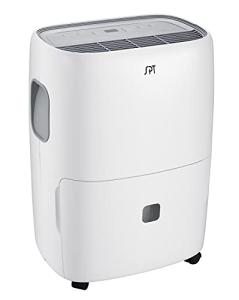
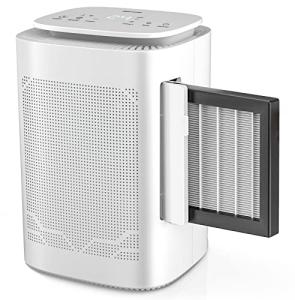
What Does a Dehumidifier Actually Do?
A dehumidifier pulls moisture out of the air. That's the simple version. Here's what's actually happening: warm, humid air gets drawn into the unit, passes over cold refrigerant coils, and the moisture condenses — just like water droplets forming on a cold glass of lemonade on a hot day. That collected water drips into a tank (or drains out through a hose), and the now-drier air gets pushed back into the room.
The result is lower relative humidity, which is measured as a percentage. Most experts — including the EPA — recommend keeping indoor humidity between 30% and 50%. Below 30%, the air gets too dry and causes its own problems (cracked skin, dry sinuses, static electricity). Above 50%, you're in the danger zone where mold, dust mites, and bacteria thrive.
A quality dehumidifier lets you dial in that sweet spot and maintain it automatically.
Signs You Need a Dehumidifier
Not sure if you actually need one? Here are the most common warning signs that your home has a humidity problem:
Musty odors are almost always a sign of mold or mildew growth, both of which love moisture. If your basement, bathroom, or closets have that distinctive stale smell, excess humidity is usually the culprit.
Condensation on windows — especially in winter — means the air inside is holding more moisture than it can handle at room temperature. Over time, this leads to water damage, rotting window frames, and mold along the sills.
Allergy symptoms that get worse indoors often point to dust mites, which multiply rapidly in humid conditions. If you're sneezing, coughing, or dealing with itchy eyes more when you're home, indoor air quality is worth investigating.
Visible mold or mildew is the most obvious sign. Even small spots of black or green growth on bathroom ceilings, basement walls, or around vents should be taken seriously.
Warping or buckling in wood floors and furniture happens when the material absorbs ambient moisture over time. Once the damage is done, it's expensive to fix.
High energy bills can sometimes trace back to humidity. Humid air feels hotter, which means your AC works harder during summer. Reducing moisture can actually take some of the load off your cooling system.
Types of Dehumidifiers
The dehumidifier market has gotten more sophisticated over the years. Understanding the different types helps you match the right unit to your situation.
Refrigerant (Compressor-Based) Dehumidifiers
These are by far the most common type sold in the U.S. They work using the condensation method described above and are well-suited for warm environments — typically spaces where the temperature stays above 60°F. Most whole-home and basement dehumidifiers in this category.
Refrigerant models are powerful, energy-efficient for large spaces, and available in a wide range of capacities. If you have a basement, crawl space, or large living area with persistent humidity issues, this is the type you're likely looking for.
Desiccant Dehumidifiers
Instead of using cold coils, desiccant units absorb moisture using a moisture-attracting material — similar in concept to those little silica gel packets you find in new shoes, but at a much larger scale. Desiccant dehumidifiers work better in cold environments (below 60°F) and are popular in garages, workshops, and storage spaces in colder climates.
They tend to be lighter and quieter than compressor models, though they use more energy relative to the amount of moisture they remove in warm conditions.
Whole-House Dehumidifiers
These are installed directly into your HVAC system and work in tandem with your existing heating and cooling. They're the most seamless solution if you have humidity problems throughout your home rather than in one specific area. Installation requires a professional, and the upfront cost is higher, but the coverage and convenience are unmatched.
Small/Portable Dehumidifiers
Compact units designed for bathrooms, closets, RVs, boats, or small bedrooms. They typically hold less water, have lower capacity ratings, and are best used for spot treatment rather than tackling large spaces. Many use desiccant technology and are completely silent — a nice feature for sleeping areas.
How to Choose the Right Size
Dehumidifier capacity is measured in pints per day — meaning how many pints of moisture the unit can remove from the air over 24 hours. Getting the right size matters. An underpowered unit will run constantly without making a dent; an oversized unit will cycle on and off too frequently and may not be energy-efficient.
Here's a practical starting framework for most U.S. homes:
30-pint dehumidifiers work well in moderately damp spaces up to around 1,500 square feet. Think a finished basement that gets humid in summer but doesn't have major moisture problems year-round.
50-pint dehumidifiers are the sweet spot for most American homes. They handle spaces up to 2,500 square feet effectively and are the most commonly purchased capacity range. This is what most people buy for basements, large living spaces, or open-concept floor plans.
70-pint dehumidifiers are built for seriously wet spaces — unfinished basements with visible moisture, areas that have experienced flooding or water damage, or large square footage with chronic humidity. These are workhorses.
Keep in mind that if your space is colder (like an unheated basement in winter) or more severely wet, you should size up. Ratings are typically measured under controlled lab conditions that may not match real-world performance.
Features Worth Paying Attention To
Once you've settled on a type and capacity, the features are where models start to diverge significantly.
Humidistat/Hygrostat Control lets you set a target humidity level, and the unit runs automatically to maintain it. This is nearly essential for set-it-and-forget-it convenience. Without it, you're manually switching the unit on and off.
Auto-Restart is important if you live somewhere with frequent power outages. The unit remembers your settings and resumes automatically when power is restored, so you don't come home to a flooded collection tank or a basement that's gotten humid again.
Continuous Drain Option allows you to connect a hose and let the water drain directly into a floor drain or sump pit. If you're using your dehumidifier constantly (which many basement units are), emptying a tank every day or two gets old fast. Continuous drainage is a genuine quality-of-life upgrade.
Built-in Pump takes the continuous drain concept a step further — instead of relying on gravity, a built-in pump can push water upward and into a sink or utility tub. Essential if your drainage point is higher than the unit itself.
Filter and Air Quality Features are increasingly common on newer models. Some units include activated carbon filters that help reduce odors, while others include basic particle filtration. These won't replace a dedicated air purifier, but they're a nice bonus.
Wi-Fi and Smart Home Connectivity is available on a growing number of models, allowing you to monitor and adjust settings from your phone or integrate with platforms like Amazon Alexa and Google Home. Useful if your dehumidifier is in a hard-to-access area like a crawl space.
Energy Star Certification matters if the unit is going to run frequently — and most do. Energy Star-certified dehumidifiers meet efficiency standards set by the U.S. Department of Energy and can meaningfully reduce your electricity costs over time.
Dehumidifiers for Specific Spaces
Different areas of your home have different needs, and it's worth thinking about placement before you buy.
Basements are the number one use case for dehumidifiers in the U.S. They're below grade, often poorly ventilated, and naturally prone to moisture intrusion. A 50- or 70-pint model with continuous drainage is usually the right call here.
Crawl Spaces often get overlooked, but they're one of the biggest sources of moisture in the whole home. Humid air in a crawl space rises into living areas, affects flooring, and encourages mold growth in insulation and subfloor materials. A crawl space-specific dehumidifier (rated for the environment and sized for the square footage) can make a dramatic difference.
Bathrooms and laundry rooms benefit from smaller, targeted units — or simply better ventilation combined with a small dehumidifier. After showers or laundry cycles, humidity spikes significantly. A compact unit or an exhaust fan upgrade works well here.
Whole Home solutions through an HVAC-integrated system are ideal if your entire house runs humid — common in Southern states like Florida, Louisiana, and the Gulf Coast where outdoor humidity is relentlessly high from May through October.
Maintenance and Long-Term Care
A dehumidifier is a relatively low-maintenance appliance, but a little attention goes a long way toward keeping it running efficiently for years.
Empty and clean the water tank regularly to prevent mold and bacteria from growing inside the collection container — especially if the unit isn't draining continuously. A quick rinse with mild soap and warm water every few weeks is plenty.
Clean or replace the air filter per the manufacturer's schedule. A clogged filter makes the unit work harder and reduces its moisture-removal efficiency.
Check the coils periodically for frost or ice buildup, particularly on refrigerant models running in cooler temperatures. Some units have an automatic defrost feature; on others, you may need to temporarily shut the unit down.
Inspect the drainage hose and connection points seasonally to make sure nothing is kinked, clogged, or leaking.
Why the Right Dehumidifier Is Worth Every Penny
The real cost of excess indoor humidity isn't the electricity bill. It's the mold remediation that runs into the thousands of dollars. It's the hardwood floor replacement. It's the allergy medications and the doctor's visits. It's the structural damage to your home's framing and insulation over years of unaddressed moisture.
A good dehumidifier — properly sized, correctly placed, and well-maintained — pays for itself. It protects your home, improves your air quality, and makes your living spaces genuinely more comfortable. In the right conditions, it even helps your air conditioning work more efficiently.
Whether you're dealing with a damp basement, a stuffy Southern summer, or just trying to stay ahead of mold season, there's a dehumidifier built for your situation. Browse our full selection below, filtered by capacity, type, room size, and features, to find the right match for your home.