Roof ventilators are essential for keeping your home’s air fresh and preventing unwanted heat buildup. They help improve airflow, reducing moisture and promoting a comfortable environment. Plus, they can lower your energy bills by allowing your HVAC system to run more efficiently.
Roof Ventilators
Keep your home cool and fresh with high-quality roof ventilators that enhance airflow and efficiency
Product List
What Are Roof Ventilators?
Roof ventilators are devices installed at or near the roofline of a building to facilitate the movement of air. They work on a simple but powerful principle: hot air rises. By providing an exit point at the highest part of the structure, roof ventilators allow heat, humidity, odours, and airborne contaminants to escape naturally — or, in powered models, to be actively exhausted.
The result is a building that stays cooler in summer, drier in wet seasons, and healthier year-round. Roof ventilators are used across virtually every building type: factories, warehouses, schools, hospitals, retail spaces, agricultural buildings, and domestic homes.
They come in a wide range of designs to suit different roof types, climates, airflow requirements, and budget levels. Some spin silently in the wind; others are driven by solar panels; others plug into your existing electrical system. Whatever your building demands, there's a roof ventilator built for the job.
Why Roof Ventilation Matters More Than You Think
Most people don't think about what's happening above their ceiling until something goes wrong. By then, the damage — to the structure, to air quality, and often to health — can already be significant.
Here's what inadequate roof ventilation actually costs you:
Heat buildup is the most visible problem. In summer, an unventilated roof space can reach temperatures of 60°C or more. That heat radiates down into living and working spaces, driving up cooling costs and making environments genuinely uncomfortable — or in some industrial settings, dangerous.
Moisture accumulation is the silent killer of buildings. Cooking, breathing, bathing, and industrial processes all release water vapour into the air. Without ventilation, that moisture has nowhere to go. It condenses on cool surfaces, soaks into timber, corrodes metal, and creates the perfect breeding ground for mould and mildew. Structural damage from unchecked moisture can take years off a building's lifespan.
Poor indoor air quality affects concentration, productivity, and health. Fumes from manufacturing, VOCs from paints and adhesives, CO₂ from occupants, and particulates from industrial processes all need somewhere to go. Roof ventilators provide that exit.
Energy waste is the financial consequence of ignoring ventilation. Air conditioning systems work far harder — and cost far more to run — when they're fighting a 60-degree roof space. Effective roof ventilation reduces the thermal load on your building, cutting cooling costs in a way that pays back the cost of installation quickly.
Getting ventilation right from the start is one of the highest-return investments you can make in any building.
Types of Roof Ventilators
Understanding your options is the first step to making the right choice. Roof ventilators fall into several distinct categories, each with its own strengths.
Wind-Driven (Rotary) Ventilators
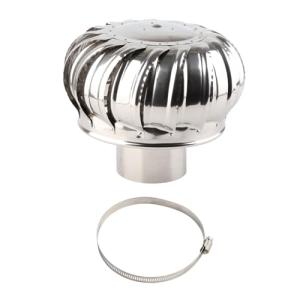
These are the classic spinning dome ventilators you see on warehouses and factories across the world. They work by harnessing wind energy to create a low-pressure zone inside the dome, drawing air upward and out of the building. With no moving parts in most modern designs — or very few — they're virtually maintenance-free and cost nothing to run.
Wind-driven ventilators are best suited to buildings in areas with consistent airflow and where ventilation needs are moderate. They're reliable, cost-effective, and extremely long-lasting when manufactured from quality aluminium or stainless steel.
Solar-Powered Roof Ventilators
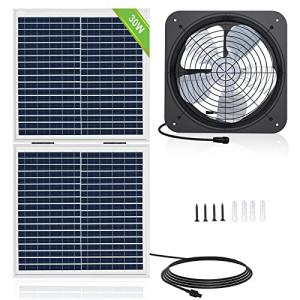
Solar ventilators combine a small photovoltaic panel with an electric fan. During daylight hours — exactly when heat buildup is at its worst — the solar panel powers the fan without drawing from the grid. Many models include battery storage or a mains backup to maintain airflow through the night or on overcast days.
Solar roof ventilators are an excellent choice for buildings where running electrical cabling is difficult or expensive, and for clients who want to minimise ongoing operational costs while meeting sustainability targets.
Electrically Powered Roof Exhaust Fans
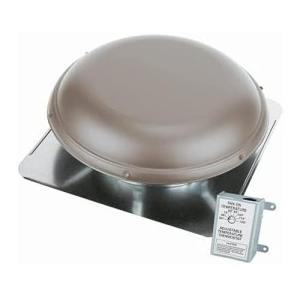
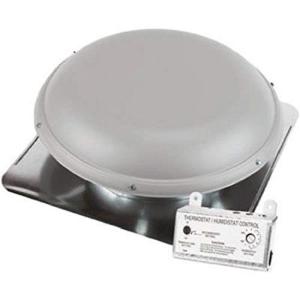
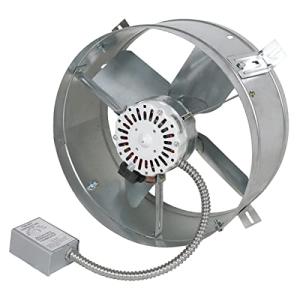
When you need guaranteed, consistent airflow regardless of weather conditions, electric roof fans are the answer. These are powered by mains electricity and can be set to run on timers, thermostats, or humidity sensors — giving you precise control over your building's environment.
Electric roof ventilators are common in commercial kitchens, server rooms, laboratories, food processing facilities, and any environment where air quality or temperature control is critical. They deliver significantly higher airflow rates than passive or wind-driven options.
Ridge Ventilators
Rather than a spinning dome or a powered unit, ridge ventilators run along the apex of the roof as a continuous strip. They allow hot air to escape along the full length of the roof, distributing the exhaust evenly and working in tandem with soffit or eave inlets to create a continuous airflow path through the roof space.
Ridge ventilation is particularly popular in domestic and light commercial construction where aesthetics matter and a low-profile solution is preferred.
Gravity Ventilators and Cowls
Gravity ventilators and cowls are fixed openings designed to allow natural convection to carry air out of the building. They're simple, low-cost, and require no mechanical components at all. Cowls include weather hoods or baffles to prevent rain ingress while allowing air to flow freely.
These are a practical choice for mild climates or lower-demand applications where basic ventilation is sufficient.
How to Choose the Right Roof Ventilator
With so many options available, selecting the right product comes down to a clear assessment of your building and its requirements.
Calculate your airflow requirement. The starting point is always air changes per hour (ACH) — how many times per hour the total air volume of the space needs to be replaced. Industrial facilities with fumes or heat typically need 20–60 air changes per hour. Warehouses might need 10–20. Residential roof spaces often require just 6–10. Once you know your ACH requirement, you can calculate the total cubic metres per hour (m³/h) of ventilation needed and size your ventilator accordingly.
Consider your climate. In consistently windy coastal or open areas, wind-driven ventilators perform excellently. In sheltered urban locations or areas with calm summers, powered ventilation becomes more important. In regions with very high solar irradiance, solar ventilators are an obvious choice.
Think about the contaminants being exhausted. Standard ventilators are fine for heat and general humidity. If you're exhausting corrosive fumes, chemically aggressive vapours, or high-temperature air from industrial processes, you'll need ventilators built from appropriate materials — typically 316 stainless steel or specialised coated aluminium — and potentially ATEX-rated units for explosive atmospheres.
Match the ventilator to your roof type. Flat roofs, pitched metal roofs, tiled domestic roofs, and curved industrial roofs each require different mounting solutions. Check compatibility carefully and look for products that offer flexible base options or can be custom-fitted to your roof profile.
Balance intake and exhaust. Ventilation works as a system. Exhaust-only ventilation creates negative pressure that forces air in through uncontrolled gaps, reducing efficiency and potentially drawing in dust or unconditioned outside air. Pair your roof exhaust ventilators with appropriately sized air inlets — louvres, soffit vents, or low-level openings — to create a balanced, efficient airflow path.
Materials and Build Quality
The longevity of a roof ventilator depends heavily on the materials used in its construction. Rooftop environments are harsh — they endure UV radiation, thermal cycling, rain, wind, and in coastal or industrial areas, salt spray and chemical contamination.
Aluminium is the most common material for commercial and industrial roof ventilators. It's lightweight, corrosion-resistant, and easy to form into complex shapes. Quality aluminium ventilators with proper powder-coat or anodised finishes can last 20–30 years with minimal maintenance.
Stainless steel is the premium choice for demanding environments. Grade 304 stainless suits most applications; grade 316 is specified where chloride exposure (coastal environments, chemical processing) is a concern. Stainless ventilators are heavier and more expensive but essentially impervious to corrosion.
Polycarbonate and UV-stabilised plastics are used in some domestic and light commercial products, particularly where a low price point is the priority. Quality varies enormously in this segment — look for UV-stabilised grades with proven longevity in your local climate.
Bearings and mechanical components matter as much as the outer shell. Sealed, lubricated bearings in rotating ventilators dramatically extend service life and reduce noise. Cheap unsealed bearings are a false economy.
Installation Considerations
Roof ventilator installation should always be approached carefully — a poorly fitted unit is a potential source of leaks, noise, and underperformance.
For most commercial and industrial applications, installation by a qualified roofer or mechanical services contractor is strongly recommended. Proper flashing and sealing around the base is critical to prevent water ingress. Many quality ventilator products include pre-formed base plates or custom flashing kits to simplify installation on common roof profiles.
For electric and solar models, electrical connections should be made by a licensed electrician and comply with local wiring regulations.
Spacing matters. A single large-diameter ventilator over the hottest part of the roof is often more effective than multiple small units distributed unevenly. Consult the manufacturer's airflow data and sizing guides before finalising your layout.
Maintenance and Long-Term Performance
One of the genuine advantages of quality roof ventilators is that most require very little ongoing maintenance. Wind-driven units with sealed bearings may need nothing more than an annual visual inspection. Electric units should have their motors and electrical components checked periodically, and any filters cleaned or replaced according to the manufacturer's schedule.
What you should always do is monitor performance. If airflow seems to have decreased, check for obstruction — bird nests, debris, or damaged blades are common culprits. Listen for unusual noise in rotating units, which can indicate bearing wear. Catching these issues early prevents more expensive repairs later.
Sustainability and Energy Efficiency
Modern roof ventilators are an important part of sustainable building design. By reducing thermal loads and improving natural air circulation, they directly reduce the demand placed on air conditioning and mechanical cooling systems — which account for a significant proportion of commercial energy consumption.
Solar-powered and wind-driven models have essentially zero operational carbon footprint. Even electric ventilators, when properly sized and controlled, consume a fraction of the energy that would be used by air conditioning systems trying to compensate for poor ventilation.
For projects targeting green building ratings — BREEAM, Green Star, LEED, or similar — roof ventilators contribute meaningfully to energy and indoor environment quality credits.
Browse Our Roof Ventilator Range
Our range of roof ventilators covers every application from domestic roof spaces to demanding industrial environments. We stock wind-driven rotary ventilators, solar-powered units, electric exhaust fans, ridge ventilators, and gravity cowls — all sourced from manufacturers with proven track records in build quality and longevity.
Whether you're specifying ventilation for a new build, retrofitting an existing structure, or replacing a failed unit, our team can help you select the right product, calculate the airflow you need, and ensure you get the correct mounting configuration for your roof type.