Air Handling Units (AHUs) are the unsung heroes of HVAC systems, making sure your indoor air stays fresh and comfortable. Whether it's heating, cooling, or ventilating, these units play a key role in maintaining a pleasant atmosphere in your space. If you're looking for reliable options that fit your needs, you've come to the right place!
Air Handling Units (AHU)
Discover efficient air handling units that keep your indoor air comfortable and fresh
Product List
What Is an Air Handling Unit?
An Air Handling Unit — commonly referred to as an AHU — is the mechanical heart of any commercial, industrial, or large-scale HVAC system. Its job is straightforward but critical: it takes in air, treats it, and delivers it to the spaces where people live and work. Behind that simple description, though, sits a sophisticated piece of equipment that directly shapes how comfortable, healthy, and energy-efficient a building is going to be.
At its core, an AHU is a large metal box — or a series of connected sections — that houses fans, heating and cooling coils, filters, dampers, and sometimes humidifiers or heat recovery wheels. Air enters, gets cleaned, conditioned to the right temperature and humidity, and then pushed through a network of ducts to wherever it's needed. On the return side, stale or used air comes back, gets mixed with fresh outdoor air, and the cycle begins again.
Whether you're managing a hospital, a shopping mall, a data centre, a school, or an office block, the AHU you choose will have a direct and measurable impact on running costs, occupant wellbeing, regulatory compliance, and the long-term performance of your entire HVAC installation.
How Does an Air Handling Unit Work?
Understanding how an AHU operates helps you choose the right unit and maintain it properly over its lifespan.
Air Intake and Mixing
Most systems draw in a combination of fresh outdoor air and recirculated air from inside the building. Motorised dampers control the ratio between the two, balancing air quality requirements with energy efficiency. In full fresh-air applications — common in hospitals or labs — the unit handles 100% outdoor air, which places much higher demands on the heating and cooling equipment inside.
Filtration
Before air reaches the occupants, it passes through one or more filter stages. A typical installation uses a coarse pre-filter to catch large particles, followed by a finer bag or rigid cassette filter rated to a specific EN ISO 16890 or MERV standard. High-risk environments add HEPA filters capable of removing particles down to 0.3 microns with 99.97% efficiency.
Heating and Cooling Coils
Heating coils bring the air up to the desired supply temperature. They can be hot-water coils connected to a central boiler or heat pump circuit, electric resistance elements, or steam coils in industrial settings. Cooling coils work in the opposite direction, chilling the air — and typically dehumidifying it at the same time as moisture condenses on the cold surface. Chilled-water coils connected to a central chiller plant are the most common arrangement in large buildings, while direct-expansion (DX) coils are popular in smaller or standalone applications.
The Fan Section
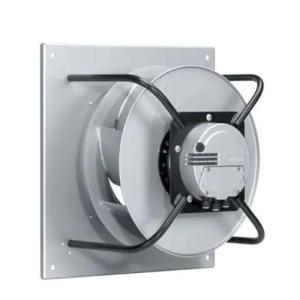
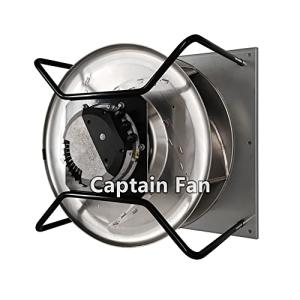
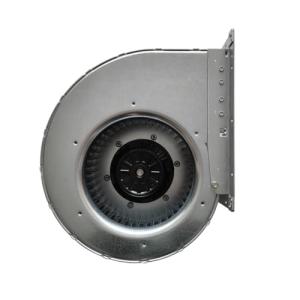
The supply fan moves conditioned air out into the ductwork. Fan selection matters enormously: a poorly matched fan wastes energy, creates noise problems, and shortens the life of the unit. Modern AHUs increasingly use EC (electronically commutated) motors paired with variable-speed drives, allowing the system to ramp output up or down in response to actual demand rather than running flat-out regardless of load.
Humidification and Dehumidification
Certain applications — pharmaceutical manufacturing, museums, data centres, operating theatres — require precise humidity control. AHUs can be specified with steam humidifiers, evaporative humidifiers, or ultrasonic atomisers to add moisture, and with cooling coil dehumidification or desiccant wheels to remove it.
Heat Recovery
Energy recovery is one of the most impactful upgrades available in a modern AHU. A heat recovery device — rotary wheel, plate heat exchanger, or run-around coil — captures the thermal energy in the exhaust air stream and uses it to pre-condition the incoming fresh air. In climates with cold winters or hot summers, this can cut heating and cooling energy consumption by 60–80%, delivering payback periods measured in a few years rather than decades.
Types of Air Handling Units
Not all AHUs are the same, and the market offers a wide range of configurations to suit different applications and installation constraints.
Modular Air Handling Units
Modular AHUs are the most flexible option. They're assembled from a series of bolt-together sections — each containing a specific component or group of components — so the designer can configure the unit precisely for the application. Sections can be added, removed, or rearranged, and modular units can be built to virtually any size. This makes them the default choice for medium-to-large commercial and industrial projects where off-the-shelf dimensions won't work.
Packaged Rooftop Units
Rooftop AHUs integrate all the key components — fan, coils, filters, and sometimes the refrigeration equipment — into a single weather-resistant enclosure designed to sit on a flat roof. They're particularly popular in retail and light commercial settings where roof space is available and a factory-assembled, tested package simplifies installation and reduces site time.
Precision Air Handling Units
Data centres and telecommunications rooms have unique requirements: tight temperature and humidity tolerances, continuous 24/7 operation, and very high sensible heat loads with minimal latent (humidity) load. Precision AHUs are specifically designed for these environments, with high-efficiency cooling coils, close-control sensors, and N+1 redundancy arrangements to ensure uptime even if one unit fails.
Clean Room AHUs
Pharmaceutical plants, semiconductor fabs, and hospital operating suites require cleanroom-rated AHUs built to resist microbial growth, withstand rigorous cleaning regimes, and deliver filtered air at the volumes and pressures needed to maintain positive pressure barriers. These units use stainless steel or epoxy-coated internals, sealed construction, and HEPA or ULPA terminal filtration.
Heat Recovery AHUs
As energy regulations tighten across Europe and beyond, heat recovery units have shifted from a premium option to a standard expectation. Dedicated heat recovery AHUs combine supply and extract air streams within a single casing, maximising the transfer efficiency and minimising the installation footprint.
Key Specifications to Consider When Buying an AHU
Selecting the wrong AHU for an application is an expensive mistake. Here are the parameters that matter most when evaluating units.
Airflow Capacity
Measured in cubic metres per hour (m³/h) or litres per second (l/s), airflow capacity is the starting point for any selection. It's determined by the ventilation rates required by building regulations, occupancy levels, process requirements, or a combination of all three. Always leave a reasonable margin above the calculated minimum to allow for future changes in building use.
External Static Pressure
The fan must overcome the resistance of the ductwork, terminal devices, and the components inside the unit itself. External static pressure, measured in Pascals (Pa), determines the fan power required. Underestimating it leads to poor airflow distribution; overestimating it wastes energy and creates noise.
Thermal Performance
The heating and cooling coil capacity must match the loads calculated for the project. Thermal wheel or heat exchanger efficiency — expressed as a temperature effectiveness percentage — determines how much energy can be saved through heat recovery.
Specific Fan Power (SFP)
SFP is a measure of how efficiently the fan section converts electrical energy into air movement. It's calculated as Watts per litre per second (W/l/s) and is used by building regulations in many countries — including the UK's Part L and EU energy directives — to set maximum allowable limits. A low SFP is a sign of a well-designed unit with good aerodynamics, efficient motors, and clean internal airflows.
Casing Thermal Performance
The casing panels of a well-made AHU should be thermally broken — meaning the inner and outer skins are separated by insulation without a conductive metal bridge — to prevent condensation forming on the outside and energy leaking out. Casing leakage rates are tested and certified to EN 1886, and should be a mandatory requirement in any specification.
Acoustic Performance
AHU noise is a common source of complaints in occupied buildings. Checking the octave-band sound power levels of a proposed unit, and ensuring the ductwork design includes adequate attenuation, avoids expensive remedial work later.
AHU Applications Across Industries
The versatility of air handling technology means these units show up in almost every sector of the built environment.
Offices and Commercial Buildings use AHUs to provide fresh, conditioned air to open-plan floors, meeting rooms, and common areas, often paired with VAV (variable air volume) terminals that allow zone-by-zone temperature control without the energy waste of constant-volume systems.
Hospitals and Healthcare Facilities depend on AHUs for infection control. Positive pressure isolation rooms protecting immunocompromised patients, negative pressure rooms containing airborne pathogens, and ultra-clean operating theatres all rely on carefully specified AHUs with high-grade filtration and validated airflow patterns.
Industrial and Manufacturing Plants use AHUs to manage process environments — controlling temperature and humidity to maintain product quality, removing fumes and particulates, and providing comfort ventilation for workers on the factory floor.
Educational Buildings benefit from high-efficiency AHUs that maintain CO₂ levels and fresh air supply in classrooms, directly improving pupil concentration and reducing absenteeism caused by poor indoor air quality.
Retail and Hospitality rely on AHUs to manage high occupancy loads, kitchen extract, and the constant opening of entrance doors — all of which create significant and variable demands on the ventilation system.
Maintenance and Lifecycle Costs
An AHU is a long-term investment. Capital cost matters, but total cost of ownership — which includes energy consumption, maintenance, and the cost of any unplanned downtime — tells a more complete story.
Regular maintenance includes filter changes (typically every three to twelve months depending on filter grade and environment), coil cleaning to maintain heat transfer efficiency, belt or bearing inspections on fan assemblies, drain pan cleaning to prevent Legionella risk, and periodic checks of damper actuators and control sensors.
Specifying an AHU with accessible components, wide doors for maintenance access, and pull-out filter frames dramatically reduces the time and cost of routine servicing. Some manufacturers offer smart monitoring options — embedded sensors and cloud-connected controls that track performance in real time, flag deteriorating components before they fail, and allow planned maintenance to replace reactive breakdowns.
Energy Efficiency and Sustainability
The HVAC industry accounts for a significant share of building energy consumption globally, and the AHU is one of the biggest single contributors within that. The good news is that modern technology offers genuinely impressive improvements over equipment from even ten years ago.
EC fan motors and variable-speed drives, high-efficiency heat recovery, improved coil design, low-leakage casings, and smart controls that respond dynamically to occupancy and weather conditions can collectively reduce AHU energy consumption by 40–60% compared to conventional designs. For organisations with sustainability targets, net-zero commitments, or BREEAM/LEED certification goals, investing in high-performance AHU specification is one of the most effective levers available.
Refrigerant choice also matters. As F-gas regulations tighten in the EU and UK, units with DX cooling should be specified with low-GWP refrigerants — R-32, R-454B, or R-290 are increasingly common choices that significantly reduce the climate impact of any refrigerant losses.
Choosing the Right AHU Supplier
With dozens of manufacturers active in the European and global market, choosing a supplier is about more than catalogue price. Look for manufacturers who offer third-party certified performance data — airflow, thermal, acoustic, and casing leakage — tested to EN 1886 and declared in line with ErP Ecodesign regulations. Factory testing of completed units before despatch, a robust selection software tool, and experienced local technical support all reduce project risk and give you confidence that the unit arriving on site will perform as specified.
Lead times, spare parts availability, and the manufacturer's track record in your specific sector are equally important considerations, particularly for critical or high-complexity applications.
Air Handling Units are one of the most consequential choices in any HVAC project. Get the specification right and you get a building that's comfortable, healthy, energy-efficient, and easy to maintain for decades. Get it wrong and you face a cycle of complaints, patching, and spiralling operating costs that no amount of controls tinkering will fully fix.