Air filters are essential for keeping your home’s air clean and your HVAC system running smoothly. They trap dust, pollen, and other allergens, making every breath you take easier and healthier. Whether you need a basic filter or something more advanced, finding the right fit can help improve your indoor air quality and extend the life of your system.
Air Filters
Breathe easier with our selection of top-quality air filters that keep your home fresh and clean
Product List
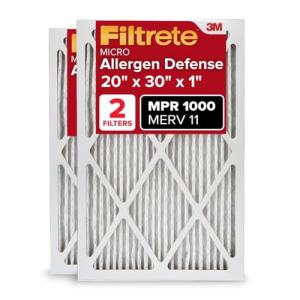
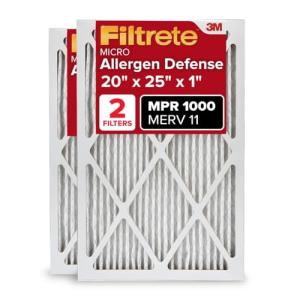
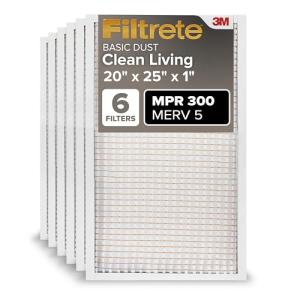
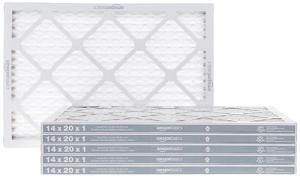
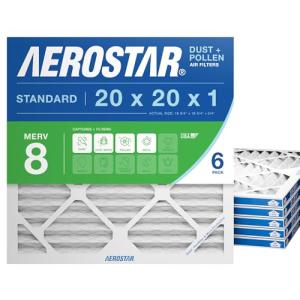
Aerostar 20x20x1 MERV 8 Filters 6-Pack
Product Review Score
4.54 out of 5 stars
90 reviews$39.84 $32.13
What Is an Air Filter and Why Does It Matter?
An air filter is a device designed to remove particles and contaminants from the air circulating through your home's heating, ventilation, and air conditioning (HVAC) system, or through a standalone air purification unit. At its most basic, it's a barrier — typically made of fibers, foam, or electrostatic material — that traps airborne particles before they cycle back into the rooms where you live, sleep, and breathe.
Here's the thing most people don't realize: your HVAC system is constantly pulling air from every room in the house, conditioning it, and pushing it back out. Without a working filter, everything floating in your indoor air — dust mites, pet hair, cooking smoke, outdoor allergens that drifted in through the windows — recirculates endlessly. A quality air filter breaks that cycle.
Beyond air quality, filters also protect your HVAC equipment. A clogged or absent filter forces your system to work harder, which shortens its lifespan and drives up your energy bills. Regular filter maintenance is simply smart home ownership.
Types of Air Filters: Choosing the Right One for Your Home
Not all air filters are the same, and the differences matter more than most people expect. Here's a breakdown of the main categories you'll come across.
Fiberglass Air Filters
The most basic and most affordable option, fiberglass filters are the flat, thin panels you've probably seen at the hardware store in large multi-packs. They do the bare minimum — catching large dust particles and debris — and they're designed to protect your HVAC equipment more than they're designed to improve your air quality. If budget is tight and you have no respiratory concerns at home, they'll do the job. But they won't catch fine particles, allergens, or microscopic contaminants.
Pleated Air Filters
Pleated filters are the sweet spot for most American households. Made from polyester or cotton paper folded into accordion-style pleats, they offer far more surface area than fiberglass filters, which means they catch significantly more particles without blocking airflow. They're available in a wide range of MERV ratings (more on that below) and tend to last one to three months depending on conditions in your home.
If you have kids, pets, or just want cleaner air without overspending, a mid-range pleated filter is almost always the right call.
HEPA Filters
HEPA stands for High Efficiency Particulate Air. It's a performance standard, not just a marketing term — a true HEPA filter must capture at least 99.97% of particles that are 0.3 microns in diameter or larger. That includes most dust, pollen, mold spores, pet dander, and even some bacteria.
HEPA filters are standard in standalone air purifiers and are also used in some specialized HVAC systems. Keep in mind that true HEPA filters are typically too dense for most residential HVAC systems — you'd need to check your system's compatibility before going this route. For air purifiers, though, HEPA is the gold standard.
Electrostatic Air Filters
Electrostatic filters use self-generating static electricity to attract and trap particles the way a magnet attracts metal shavings. They come in both disposable and washable varieties. Washable electrostatic filters are popular with homeowners who want a longer-term solution — you rinse them monthly, let them dry, and reinstall them. Over time, the cost per use drops significantly compared to disposable options.
The tradeoff: they require consistent cleaning to stay effective, and if you skip a cleaning cycle, their performance drops noticeably.
Activated Carbon Filters
Carbon filters are built for a different job. While most filters focus on trapping particles, activated carbon filters are designed to absorb gases, odors, and volatile organic compounds (VOCs) — things like cooking smells, cigarette smoke, chemical fumes, and off-gassing from new furniture or paint. They're often used in combination with HEPA filters in air purifiers for a dual-action approach to air quality.
If odors or chemical sensitivities are a concern in your home, look for an air purifier or filter system that includes an activated carbon stage.
UV Air Filters
Ultraviolet filters use UV-C light to neutralize bacteria, viruses, and mold spores by disrupting their DNA. They don't trap particles the traditional way — instead, they kill or deactivate biological contaminants as air passes through. UV filters are most effective when used alongside a particulate filter like a HEPA or pleated filter. You'll find UV stages in higher-end air purifiers and some whole-home HVAC add-ons.
Understanding MERV Ratings
If you've ever stood in the filter aisle confused by the numbers on the packaging, you were looking at MERV ratings. MERV stands for Minimum Efficiency Reporting Value, and it's a standardized scale from 1 to 16 that tells you how effectively a filter captures particles of varying sizes.
Here's a practical breakdown:
MERV 1–4: Basic filtration. Catches large debris like lint and dust bunnies. Mostly for protecting equipment, not improving air quality.
MERV 5–8: Good for most homes. Catches dust, mold spores, pet dander, and some pollen. This is the range where most pleated filters live.
MERV 9–12: Better filtration for households with allergy sufferers, asthma, or pets. Catches fine dust, auto emissions particles, and most biological contaminants.
MERV 13–16: Hospital-grade filtration. Captures bacteria, smoke, and very fine particles. These are excellent for homes with serious respiratory concerns, but they can reduce airflow in systems not designed for high-resistance filters — always check your HVAC specs.
A MERV 11 or 13 filter hits the sweet spot for most families looking to meaningfully upgrade their indoor air quality without risking system strain.
Air Filter Sizes: Getting the Right Fit
An air filter that doesn't fit correctly is worse than no filter at all — gaps around the edges let unfiltered air bypass the filter entirely. Before you buy, pull out your existing filter and check the dimensions printed on its frame. Standard sizes are listed as length × width × depth (for example, 16x25x1 or 20x20x4).
If your filter frame shows a "nominal" size and an "actual" size, buy based on the nominal size — that's what the slot is designed for. When in doubt, measure the opening itself with a tape measure rather than relying on guesswork.
Common depths are 1 inch, 2 inches, and 4 inches. Thicker filters last longer and often filter more effectively, but again, your HVAC system has to be configured for that depth. A 4-inch deep filter won't fit in a housing designed for 1-inch filters.
How Often Should You Replace Your Air Filter?
This is the question almost every homeowner gets wrong. The answer depends on several factors:
Standard 1-inch filters in average homes: Every 30–60 days.
High-quality pleated filters in low-traffic homes: Every 90 days.
Homes with one or more pets: Every 45–60 days, sometimes more.
Homes with allergy or asthma sufferers: Every 20–45 days.
Vacation homes or rarely occupied spaces: Every 6–12 months.
One practical tip: write the installation date on the filter with a marker when you change it. It takes two seconds and removes all the guesswork. You can also set a recurring reminder on your phone. HVAC technicians consistently report that dirty, neglected filters are one of the top causes of preventable system failures — so this simple habit pays off in real dollars.
Air Filters for Allergies and Asthma
If someone in your household deals with seasonal allergies, asthma, or other respiratory conditions, air filtration deserves some extra attention. The American Lung Association and similar health organizations consistently point to indoor air quality as a significant factor in respiratory health — and indoor air is often more polluted than outdoor air, particularly in well-sealed modern homes.
For allergy and asthma households, look for filters rated MERV 11 or higher, and consider pairing your HVAC filtration with a standalone HEPA air purifier in the bedroom. During peak allergy seasons — spring pollen season and fall ragweed season especially — increase your filter change frequency and keep windows closed on high-count days.
Pet owners dealing with dander-related allergies will also benefit from more frequent vacuuming with a HEPA-filtered vacuum, in addition to upgraded HVAC filtration.
Whole-Home Filtration vs. Standalone Air Purifiers
Both approaches have their place, and many households benefit from using both together.
Your HVAC system's air filter handles whole-home circulation — every room that's connected to your ductwork gets the benefit of filtered air. It's passive, it runs automatically, and it's your first line of defense.
Standalone air purifiers work by actively drawing in room air, filtering it, and recirculating it. They're especially useful in bedrooms, home offices, nurseries, or any room where someone spends a lot of time. They're also helpful in spaces that might not get great HVAC coverage, like basement offices or older homes with uneven duct distribution.
For most families, the most effective approach is a solid MERV 11–13 HVAC filter combined with a true HEPA air purifier in the bedroom. That combination covers both whole-home circulation and the place where you spend the most unconscious hours.
What to Look for When Shopping for Air Filters Online
When you're browsing through filter options, here are the things worth paying attention to:
Filter dimensions: Double-check before every purchase. Sizes are not standardized between brands in terms of actual vs. nominal sizing.
MERV rating: Match it to your actual needs, not the highest possible number. More isn't always better if your system can't handle the airflow restriction.
Filter depth: Make sure it matches your housing slot.
Brand consistency: Switching brands mid-filter-life is fine, but sticking with a consistent MERV rating across replacements gives you more predictable results.
Subscription or multi-pack pricing: Many retailers offer significant savings when you buy in bulk or set up a filter subscription. Given that you'll be replacing filters multiple times per year, this can add up to real savings.
Smart filter monitors: Some newer HVAC systems and smart home setups include filter life monitors that alert you when it's time to replace. If you're prone to forgetting, this is a worthwhile upgrade.
Cleaner Air Is Closer Than You Think
You don't have to invest in an expensive whole-home air purification system to breathe meaningfully better air. Sometimes it's as simple as upgrading from a basic fiberglass filter to a quality MERV 11 pleated filter and committing to a regular replacement schedule. That one change — made consistently — can reduce the dust load in your home, ease allergy symptoms, extend your HVAC system's life, and create a noticeably cleaner environment.
Air filters are one of the rare home products where a modest upgrade delivers outsized results. Browse the full selection, match the filter to your home's needs, and change it on schedule. Your lungs — and your HVAC system — will thank you.