Portable air conditioners are a game changer for keeping your space cool and comfy without the hassle of complicated setups. They're perfect for apartments, homes, or even offices because you can easily move them from room to room. Plus, with various sizes and features, you can find one that fits your needs and budget just right.
Portable Air Conditioners
Stay cool on the go with our powerful and convenient portable air conditioners
Product List
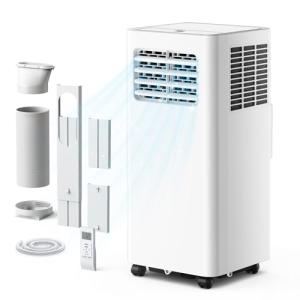
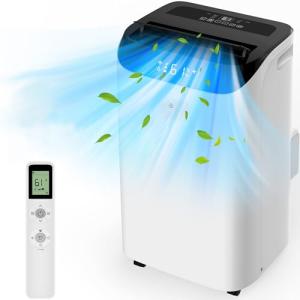
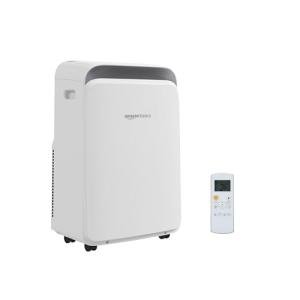
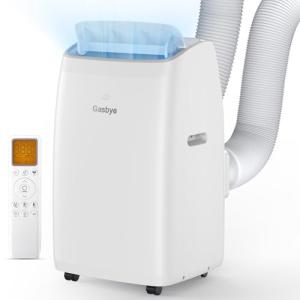
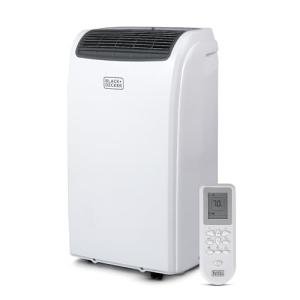
What Is a Portable Air Conditioner and How Does It Work?
A portable air conditioner is a self-contained cooling unit that sits on the floor and moves on caster wheels, making it easy to roll from room to room. Unlike a window AC that sits permanently in a window frame, a portable unit uses a flexible exhaust hose — typically 5 to 6 feet long — that vents hot air out through a window kit, sliding door, or even a drop ceiling.
The cooling process works just like any air conditioner: warm air is drawn in from the room, passed over a refrigerant-cooled evaporator coil, and then blown back out as cool air. The heat absorbed in that process gets expelled through the exhaust hose. Some models use a single-hose system, while others use a dual-hose design that pulls fresh outside air for exhausting, making the unit more efficient overall.
One thing to know upfront: portable ACs do produce some condensation as a byproduct of cooling. Depending on the model, this moisture is either collected in an internal bucket (which you empty periodically), evaporated and vented out through the exhaust hose, or drained continuously through a connected hose — a feature often called "auto-evaporation" or "no-bucket" design.
Who Should Buy a Portable Air Conditioner?
Portable air conditioners aren't the right tool for every situation, but for many people, they're the perfect solution. You might be an ideal candidate if:
You rent your home. Many landlords and building managers prohibit permanent window installations. A portable AC requires nothing more than access to a window or sliding door for the exhaust hose — no tools, no drilling, no modifications.
You only need to cool one or two rooms. Running central air all day for a single home office or bedroom is expensive and wasteful. A portable unit lets you cool the space you're actually using without bringing down the temperature — and the energy bill — for your entire house.
Your home has casement or crank windows. Traditional window air conditioners don't fit in casement, jalousie, or crank-style windows. Portable ACs work with almost any window style, since the exhaust hose only requires a small opening.
You want flexibility. Moving the unit from your living room during the day to your bedroom at night takes two minutes and zero effort. That kind of flexibility is impossible with any fixed installation.
You need a temporary or seasonal solution. If you only deal with a few brutal hot months per year, a portable AC is a cost-effective alternative to installing a mini-split system or extending ductwork.
Understanding BTU Ratings: Choosing the Right Size
The most important spec on any air conditioner is its BTU rating — British Thermal Units — which measures how much heat the unit can remove from a room per hour. Get this wrong and you'll either be sweating through an underpowered unit or wasting money on one that's overkill.
Here's a general sizing guide based on room square footage:
- 150–300 sq ft — 8,000 BTU
- 300–450 sq ft — 10,000 BTU
- 450–550 sq ft — 12,000 BTU
- 550–700 sq ft — 14,000 BTU
- 700–1,000 sq ft — 14,000–18,000 BTU
A few factors can push you toward the higher end of these ranges. Rooms with high ceilings, lots of south- or west-facing windows, poor insulation, or multiple heat-generating appliances like computers and kitchen equipment will need more cooling power. The same goes for rooms that get a lot of direct afternoon sunlight — even a 300 square foot room can feel miserable if the sun beats through uncovered windows all day.
One important note: manufacturers sometimes advertise BTU ratings that don't reflect real-world performance. Look for the SACC rating (Seasonally Adjusted Cooling Capacity) or DOE rating if available — these are based on updated testing standards and give you a more accurate picture of how the unit performs in typical conditions, not just ideal lab settings.
Single-Hose vs. Dual-Hose: Which Is Better?
This is one of the most debated questions in the portable AC world, and the answer matters more than most people realize.
Single-hose portable ACs use one hose to exhaust hot air outside. As warm air is pushed out, the unit creates a slight negative pressure inside the room. This causes unconditioned air from other parts of the house — hallways, under doors, through gaps — to seep in, partly undermining the cooling effort. Single-hose units tend to be cheaper and more compact.
Dual-hose portable ACs use one hose to pull fresh outside air in for the exhaust process and a second hose to vent the hot air out. Because the unit isn't drawing replacement air from inside the room, it maintains better pressure balance and runs more efficiently. Dual-hose models are generally faster at cooling a room and more energy-efficient in the long run — though they cost more upfront and can be slightly bulkier.
For a bedroom or small room that you cool for just a few hours each night, a single-hose unit is perfectly adequate. For a home office or living space where you need sustained, all-day cooling, a dual-hose model is worth the extra investment.
Key Features to Look for When Shopping
Beyond BTU ratings and hose configuration, a handful of other features can make a significant difference in how much you actually enjoy using your portable AC day to day.
Programmable timer and sleep mode. Being able to set the unit to turn on 30 minutes before you get home, or to power down after you fall asleep, is both convenient and energy-saving. Sleep mode gradually raises the temperature setting a few degrees overnight, reducing power consumption when your body temperature naturally drops.
Fan-only and dehumidifier modes. On mild days, you may not need full cooling — just airflow. Most portable ACs double as fans and dehumidifiers, letting you pull moisture out of a humid room without running the compressor. This extends the lifespan of the unit and cuts your electricity use on shoulder-season days.
Noise level. Portable ACs aren't silent, but some are much quieter than others. Look for models rated at 52 dB or below for bedroom use — anything louder may interfere with sleep. Noise ratings are usually listed in product specs, though some manufacturers measure selectively, so reading user reviews for real-world feedback is always wise.
Auto-evaporation. If you hate emptying water tanks, prioritize models with auto-evaporation (sometimes called "self-evaporating"). These units expel condensation through the exhaust hose so you never have to deal with a bucket — or at least not very often in extreme humidity conditions.
Wi-Fi and smart home compatibility. Mid-range and premium portable ACs increasingly come with built-in Wi-Fi, companion apps, and support for Amazon Alexa, Google Home, or Apple HomeKit. If you're already building a smart home, being able to schedule and control your AC remotely is a genuinely useful feature, not just a gimmick.
Remote control. This sounds basic, but some budget models skip it entirely. Make sure any unit you buy includes a remote — hunting for controls on the back of a unit every time you want to adjust the temperature gets old fast.
Energy Efficiency: Understanding EER and Running Costs
Portable air conditioners are generally less energy-efficient than window units or central air systems, but the gap has narrowed considerably in recent years. The key metric to look at is the EER rating (Energy Efficiency Ratio) — the higher the number, the more cooling you get per watt of electricity.
Most portable ACs have EER ratings between 8 and 12. Units with an Energy Star certification have been independently tested to meet efficiency thresholds that translate to real savings on your electricity bill over the course of a season.
To estimate running costs, multiply the unit's wattage by the number of hours you run it per day, then multiply by your electricity rate per kilowatt-hour. A 1,200-watt unit running 8 hours a day at $0.15/kWh costs about $1.44 per day — roughly $43 over a 30-day month. Choosing a more efficient model can shave meaningful dollars off that figure across an entire summer.
Installation and Setup: Easier Than You Think
Setting up a portable air conditioner is genuinely straightforward. Most units ship with everything you need in the box: the exhaust hose, a window kit with adjustable panels, and all necessary connectors.
The process typically takes 10 to 20 minutes:
- Place the unit near the window you plan to use, within reach of a standard electrical outlet. Avoid extension cords if possible — portable ACs draw significant current.
- Attach the exhaust hose to the unit's vent port.
- Fit the window kit panels into your window frame and connect the hose adapter to the panel's vent opening.
- Close the window down onto the panel to create a seal.
- Power on and enjoy.
If you have a sliding glass door, many kits include a taller panel designed for that opening. For non-standard windows or walls, aftermarket kits and foam weatherstripping can help create a proper seal.
Maintenance Tips to Keep Your Unit Running Efficiently
A little regular maintenance goes a long way toward keeping your portable AC running at peak performance and extending its lifespan.
Clean the air filter every two weeks. Most portable ACs have a washable filter behind a grille on the side or back of the unit. A clogged filter forces the compressor to work harder, reduces airflow, and raises your electricity bill. Rinse it with warm water, let it dry completely, and slide it back in.
Check the condensate tank. Even on auto-evaporating models, you may need to drain collected water during very humid stretches. Most units will alert you with an indicator light when the tank is full.
Keep the exhaust hose as short and straight as possible. Every bend in the hose reduces exhaust efficiency. Try to route it in a straight or gently curved path from the unit to the window.
Store it properly in the off-season. Before putting your unit away for winter, run it in fan-only mode for an hour to dry out internal components, clean the filter, and store it upright in a dry location. Cover it with a dust bag if possible.
Portable Air Conditioners vs. the Alternatives
It's worth knowing how portable ACs stack up against other cooling options before committing.
Window air conditioners are more efficient and often cheaper for the same BTU output, but they require a compatible window and some level of installation. If your windows allow it and you don't need mobility, a window unit is usually the better buy.
Mini-split systems (ductless ACs) offer superior efficiency and quiet operation, but they require professional installation and a much larger upfront investment — typically $1,500 to $5,000 installed. They're the gold standard for permanent room cooling.
Evaporative coolers (swamp coolers) are extremely energy-efficient but only work in low-humidity climates. In humid regions, they're essentially useless.
Tower fans and box fans move air but don't actually lower room temperature. They're fine for mild days but won't make a real difference when temperatures climb into the upper 80s and beyond.
Is a Portable AC Right for You?
Portable air conditioners offer something no other cooling solution can match: genuine flexibility without any permanent commitment. They're ideal for renters, for supplementing existing AC systems, for cooling awkward spaces, and for anyone who wants the freedom to move their cooling power wherever they need it most.
Are they as efficient as a window unit or mini-split? No. Are they as quiet or powerful as a central air system? Not quite. But for the right situation, a quality portable AC delivers real, reliable comfort — and the ability to roll it from room to room, store it in a closet when the weather cools, and take it with you when you move is worth a lot.
Shop by room size first, look for a dual-hose model if efficiency matters to you, prioritize auto-evaporation if you hate emptying tanks, and check for smart features if you want modern convenience. Do those things, and you'll find a portable AC that keeps you comfortably cool all summer long.