When it comes to HVAC jobs, having the right tools makes all the difference. From basic hand tools to specialized equipment, the right gear helps you tackle any heating or cooling challenge with ease. Whether you're a seasoned pro or just starting out, these tools are essential for getting the job done right.
HVAC Tools
Find the right tools to keep your HVAC systems running smoothly and efficiently
Product List
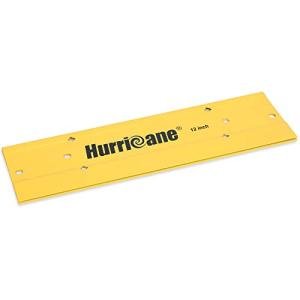
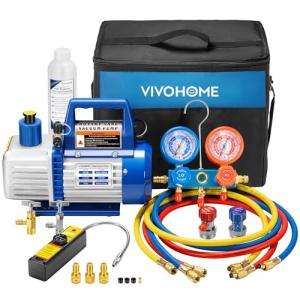
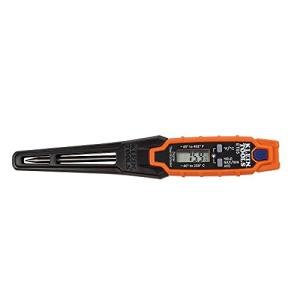
Klein Tools Instant Read Thermometer
Product Review Score
4.9 out of 5 stars
200 reviews$19.98 $15.00
What Falls Under HVAC Tools?
HVAC tools span a wide range of specialties. At the core, you'll find refrigeration service tools like manifold gauge sets, vacuum pumps, and refrigerant recovery machines — the instruments that keep you legal under EPA Section 608 regulations while handling refrigerants like R-410A, R-32, and the legacy R-22 systems still running in older homes.
Beyond refrigerant work, HVAC technicians rely on combustion analyzers to tune furnaces and boilers, digital manifolds that log data to a smartphone, anemometers and pitot tubes for airflow measurement, and psychrometers for reading wet-bulb and dry-bulb temperatures. Sheet metal work brings its own set: aviation snips, duct stretchers, drive cleat tools, and Pittsburgh lock machines.
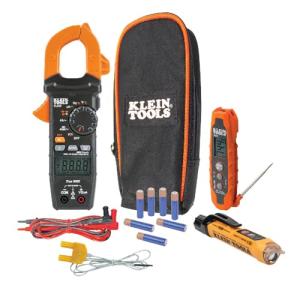
Electrical diagnostics are equally central — clamp meters with temperature clamps, non-contact voltage testers, capacitor testers, and multimeters built to handle the voltages found in rooftop units and split systems.
Refrigerant Handling Tools
Refrigerant work is the heartbeat of HVAC service, and it requires precision instruments and legal compliance in equal measure.
Manifold Gauge Sets
A manifold gauge set is the single most essential tool in an HVAC technician's bag. Traditional analog sets with color-coded hoses — blue for low-side, red for high-side, yellow for the center service port — have been the industry standard for decades. They work on every system, require no batteries, and survive years of job site abuse.
Digital manifold gauge sets, made by brands like Testo, Yellow Jacket, and Fieldpiece, add real-time superheat and subcooling calculations, Bluetooth connectivity, and data logging. If you're charging systems to manufacturer spec rather than rule-of-thumb, a digital manifold pays for itself in refrigerant savings and reduced callbacks alone.
Look for sets rated for the refrigerants you work with most. R-410A requires a higher-pressure manifold than older R-22 equipment. Some modern manifolds are compatible with A2L low-GWP refrigerants like R-32 and R-454B, which are increasingly common in new equipment entering the US market.
Vacuum Pumps
A deep vacuum is non-negotiable before any refrigerant charge. Residual moisture in a system turns into ice at the expansion device and acid over time — both are system killers. A quality two-stage vacuum pump can achieve 15–25 microns, which is the range most equipment manufacturers specify for a proper evacuation.
Brands like JB Industries, Robinair, and Yellow Jacket make reliable pumps across a wide range of CFM ratings. Match pump capacity to the systems you service — a 1.5 CFM pump is fine for mini-splits and window units, while a 6–8 CFM pump cuts evacuation time dramatically on large commercial systems.
Micron gauges, sold separately or sometimes paired with vacuum pumps, confirm that a system has reached and holds target vacuum. Pulling to 300 microns and watching it rise past 1,000 quickly tells you there's either moisture or a leak — before you waste a pound of refrigerant finding out the hard way.
Refrigerant Recovery Machines
EPA 608 regulations require that refrigerant be recovered before opening any system. Recovery machines pull refrigerant out of a system and into a recovery cylinder for proper disposal or reclamation. Speed matters here — faster recovery means less time on a job.
The Appion G5 Twin and Robinair 34788 are industry favorites for their recovery rates and reliability. For commercial refrigeration and large rooftop units, two-stage recovery machines with oil-less compressors dramatically cut recovery time on large refrigerant charges.
Diagnostic and Test Instruments
Manifold Gauge Sets and Digital Analyzers
Good diagnostics start with accurate data. Beyond gauge sets, HVAC technicians depend on a variety of measuring instruments to read what a system is actually doing versus what it should be doing.
Clamp Meters and Multimeters
A clamp meter designed for HVAC work reads AC/DC amperage, voltage, resistance, capacitance, and temperature — often through a single thermocouple port. Fluke, Klein Tools, and Fieldpiece all make HVAC-specific clamp meters that can read inrush current (critical for compressor startup diagnostics) and microcurrent for flame sensors.
Capacitor testers deserve a special mention. Weak run capacitors are one of the most common causes of AC failure in the US South and Midwest during peak summer heat. A standalone capacitor tester or a clamp meter with a capacitance function lets you test capacitors in the field without removing them from the circuit — a real time-saver on service calls.
Combustion Analyzers
For furnaces, boilers, and water heaters, a combustion analyzer measures flue gas composition — CO, CO2, O2, and NOx levels — and calculates combustion efficiency. Proper combustion tuning reduces fuel bills for homeowners, extends equipment life, and catches cracked heat exchangers before carbon monoxide becomes a safety emergency.
Testo and Bacharach make the most widely trusted combustion analyzers in the US HVAC market. Many states now require combustion analysis as part of furnace commissioning and home performance audits, so this tool has moved from optional to essential for full-service HVAC companies.
Leak Detectors
Finding refrigerant leaks fast saves both refrigerant and labor hours. Electronic leak detectors with heated diode or infrared sensors can detect leaks as small as a fraction of an ounce per year. UV dye detection is a complementary method — inject dye into a system, shine a UV light, and leaks glow bright yellow-green.
Look for detectors specifically rated for the refrigerants in your market. Units that detect R-410A won't necessarily respond to newer A2L refrigerants, so verify compatibility before buying.
Airflow and Ventilation Measurement Tools
Ventilation work — balancing air distribution, diagnosing poor airflow, commissioning new ductwork — demands its own set of precision instruments.
Anemometers and Flow Hoods
A vane anemometer or hot-wire anemometer measures air velocity at registers, grilles, and duct openings. When combined with the opening area, velocity reading translates directly to CFM — cubic feet per minute — the standard airflow measurement unit in the US.
Flow hoods, also called capture hoods or balometers, measure total airflow at a diffuser or grille in one reading. Models from Alnor and TSI are workhorses in commercial HVAC commissioning. Residential HVAC contractors use flow hoods to verify that every room in a house is getting the airflow the Manual D duct design calls for.
Manometers and Pressure Gauges
Static pressure is the foundation of duct system diagnostics. A digital manometer with Schrader fittings can measure total external static pressure in a system, revealing whether a duct system is undersized, restricted, or leaking. Models from Fieldpiece, Dwyer, and UEI are common in residential and light commercial work.
Pitot tubes extend a manometer's capability into round ductwork traversals for precise total airflow measurement — a technique used in commercial balancing and TAB (Testing, Adjusting, and Balancing) work.
Sheet Metal and Duct Fabrication Tools
Installing new systems and modifying ductwork requires a set of metalworking tools that HVAC contractors handle every day.
Aviation Snips and Metal Shears
Aviation snips — straight-cut, left-cut, and right-cut — are essential for cutting sheet metal duct, coil guards, and flashing. Color-coded handles (yellow for straight, red for left, green for right) follow universal convention so every tech knows what they're grabbing.
For high-volume sheet metal shops, electric nibblers and shears cut metal faster and with less hand fatigue. On the job site, a cordless nibbler handles odd cuts and curves that snips struggle with.
Duct Crimpers, Drivers, and Seamers
Drive cleat tools roll the edges of rectangular duct sections into Pittsburgh seams — the interlocking connection used throughout residential and commercial ductwork. Duct stretchers, S-clips, and drive clips connect duct sections cleanly and airtight.
Round duct work relies on sheet metal screws and foil tape (not cloth duct tape, which fails over time) for connections, or on snap-lock and spiral snap connections in commercial systems.
Hand Tools Specific to HVAC Work
Beyond specialized instruments, HVAC technicians carry a core set of hand tools adapted to the trade.
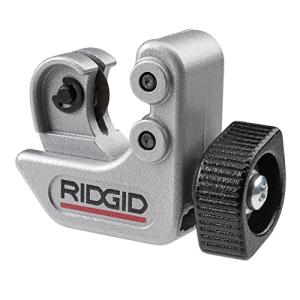
Adjustable wrenches and flare nut wrenches handle the fittings on refrigerant lines without rounding them. Tube cutters — both standard and the close-quarters mini versions — cut copper refrigerant tubing cleanly, which is critical for good flare connections and brazed joints. Swaging tools and flaring tools prepare copper tubing ends for mechanical connections.
Nitrogen regulators and hoses are used for pressure testing systems before charging — an industry best practice (and code requirement in many jurisdictions) that catches leaks before refrigerant is ever introduced.
A good cordless drill with hole saw bits, a reciprocating saw for cutting line set penetrations, and a torpedo level for checking equipment and disconnect panels round out the basic kit.
Choosing HVAC Tools for Your Work
For Service Technicians
If you're running service calls — diagnosing, repairing, and maintaining existing equipment — prioritize diagnostic accuracy and speed. A quality digital manifold, a reliable clamp meter, a fast recovery machine, and a sensitive leak detector will serve you on nearly every call. Invest in a hard case or professional tool bag to protect instruments that take regular field abuse.
For Installation Crews
Installation work leans on sheet metal tools, cordless power tools, tube handling equipment, and flaring and swaging sets. A good nitrogen regulator and manifold for pressure testing, and a reliable vacuum pump sized to the systems you install, are non-negotiable.
For HVAC Business Owners and Shop Managers
Consider building standardized tool kits for each technician — consistency across vans reduces lost time hunting for equipment and makes training new techs easier. Digital tools with data logging and Bluetooth connectivity create an audit trail for warranty claims and quality control.
Brands and Quality Tiers
The US HVAC tools market offers products across several quality tiers.
Professional-grade brands — Fieldpiece, Yellow Jacket, JB Industries, Robinair, Testo, Fluke, Klein Tools, Appion, Ritchie Engineering — build tools designed to withstand daily professional use, with calibration accuracy and support to match.
Mid-tier brands offer solid performance for HVAC technicians who are building out their kit or working in less demanding environments. Entry-level options suit homeowners and light DIY use but typically lack the accuracy and durability that professional service work demands.
When precision matters — refrigerant charging, combustion analysis, static pressure diagnostics — buy professional-grade instruments. Cheap gauges with inaccurate readings cost more in wasted refrigerant and wrong diagnoses than the price difference ever justifies.
Staying Current with Refrigerant Transitions
The US HVAC industry is in the middle of a significant refrigerant transition. New equipment using A2L refrigerants like R-32 and R-454B is entering the market as the industry phases down high-GWP refrigerants under AIM Act regulations. Some existing tools are compatible with the new refrigerants; others are not — and using incompatible equipment with A2L refrigerants carries real safety risks due to their mild flammability.
Before purchasing manifold sets, recovery machines, or refrigerant handling equipment, verify compatibility with the refrigerants you expect to work with over the next several years. Many manufacturers now clearly mark A2L-compatible tools, and investing in forward-compatible equipment now avoids having to replace an entire kit within a few years.
HVAC tools are a long-term investment in your ability to do precise, professional work. Buy for the work you actually do, maintain your instruments, and replace worn items before they cost you accuracy — or a job.