Inline duct fans are a smart solution for improving airflow in your home or workspace. They fit right into your existing duct systems, boosting ventilation without taking up extra space. If you’re looking to enhance comfort and efficiency, these fans could be just what you need.
Inline Duct Fans
Boost your ventilation and keep your space comfortable with these efficient inline duct fans
Product List
What Is an Inline Duct Fan?
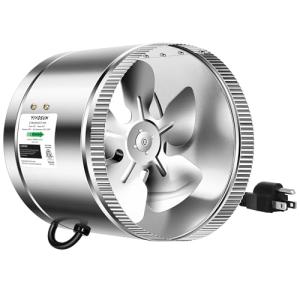
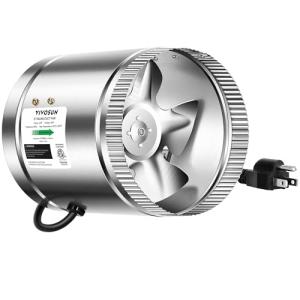
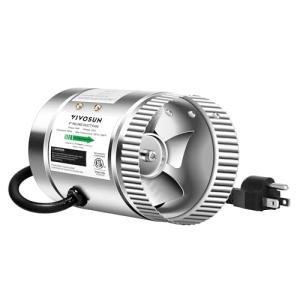
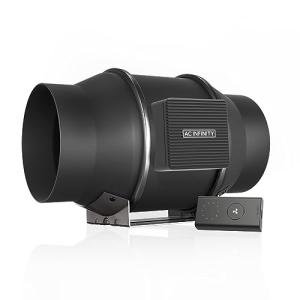
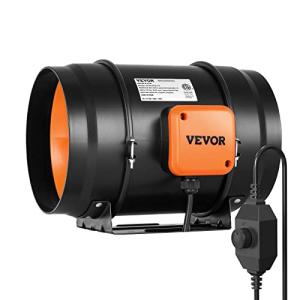
An inline duct fan is a motorised fan unit that mounts directly inside a circular or rectangular duct run. Unlike surface-mounted extractor fans — which attach to a wall or ceiling and are visible in the room — inline fans are hidden within the ductwork itself. Air enters one end of the fan housing, passes through the impeller, and exits out the other end, creating continuous, directed airflow through connected ducting.
This in-duct positioning gives inline fans several practical advantages. Because the motor and housing are physically remote from the living or working space, they operate far more quietly at the point of use. The noise generated at the fan itself stays inside the duct run, well away from where people actually spend time. It also means a single fan can service multiple rooms via branched ducting, making inline fans a cost-effective solution for whole-home or multi-room ventilation strategies.
Where Are Inline Duct Fans Used?
The honest answer is: almost everywhere that air needs to move.
Residential ventilation is the most common application. Bathrooms, kitchens, utility rooms, and loft conversions all benefit from inline fans when a standard extractor isn't powerful enough or when aesthetics matter — nobody wants a chunky grille dominating their newly tiled bathroom wall.
Grow rooms and grow tents rely heavily on inline fans. Maintaining precise temperature and humidity control inside a sealed growing environment is critical for plant health, and an inline fan paired with a carbon filter and speed controller gives growers granular control over their climate. The fan's ability to handle both intake and exhaust duties makes it the backbone of any serious cultivation setup.
Home workshops, garages, and spray booths need reliable fume and particulate extraction. An inline fan connected to flexible ducting can pull solvent fumes, sawdust, and welding smoke directly to an outdoor vent, keeping the working environment safe and compliant with ventilation standards.
Commercial kitchens, restaurants, and food prep areas are required by building regulations to maintain specific air change rates. Inline fans integrated into canopy hood exhaust systems handle grease-laden air efficiently, especially when paired with grease filters upstream of the fan.
Data centres and server rooms generate enormous heat loads. Inline fans mounted in server rack exhaust pathways or ceiling-level duct runs help maintain the sub-25°C ambient temperatures that sensitive electronics demand, often working alongside air conditioning systems to improve thermal efficiency.
Hydroponics facilities, cannabis cultivation, and commercial greenhouses share the same climate-management challenges as home grow rooms, scaled up significantly. Multi-fan arrays and larger diameter units are common in these environments.
Key Features to Look For
Fan Diameter and Airflow Capacity
Inline fans are sized by their duct diameter — 100mm (4"), 125mm (5"), 150mm (6"), 200mm (8"), 250mm (10"), and larger. Larger diameter generally means more airflow capacity, measured in cubic metres per hour (m³/h) or cubic feet per minute (CFM).
To choose the right size, calculate the volume of your space (length × width × height) and decide how many air changes per hour you need. Bathrooms typically require 10–15 air changes per hour. Grow tents need the entire internal volume exchanged every 1–3 minutes. Server rooms may need 30 or more air changes per hour depending on the heat load. Once you have your required airflow figure, choose a fan rated comfortably above it — you'll often run it at reduced speed anyway, which extends motor life and cuts noise.
Static Pressure Rating
Airflow capacity figures quoted by manufacturers are usually measured in free air — with nothing connected to the fan. The moment you add ductwork, bends, filters, and grilles, resistance builds up and actual airflow drops. This resistance is called static pressure, measured in Pascals (Pa).
A fan with a strong static pressure curve will maintain useful airflow even against high duct resistance. This matters enormously in long duct runs, installations with multiple bends, or setups using carbon filters (which add 50–100 Pa of resistance on their own). Always check the fan's performance curve, not just its headline CFM or m³/h figure.
Motor Type: AC vs EC
Traditional inline fans use AC (alternating current) motors. They're reliable, affordable, and well-understood. However, AC motors run at fixed speeds unless paired with a separate variable speed controller, and they're generally less energy-efficient than modern alternatives.
EC (electronically commutated) motors are brushless DC motors with built-in electronic control. They're significantly more efficient — often using 30–50% less energy than equivalent AC motors at full speed — and they have variable speed built in as standard. Many EC inline fans also offer 0–10V control inputs for integration with building management systems, thermostats, or CO₂ controllers. The upfront cost is higher, but long-term running cost savings and integration flexibility often justify the investment, especially in commercial applications or situations where the fan runs 24/7.
Noise Levels
Inline fans are inherently quieter at the point of use than surface-mounted fans, but that doesn't mean noise is irrelevant. Motor hum, bearing noise, and turbulence-generated broadband noise all travel through ductwork. Look for fans with dB(A) ratings at a specified airflow and distance — this gives you a meaningful comparison point.
For bedroom or home office applications where background noise is noticeable, prioritise fans with low dB(A) figures and consider adding acoustic flex ducting or duct silencers (acoustic attenuators) between the fan and the room diffuser. Anti-vibration mounting brackets also help prevent motor vibration from transmitting into structural elements and creating secondary noise.
Speed Control Compatibility
Unless you're installing a fan that will run at full speed permanently, check that it's compatible with the speed controller you intend to use. Not all fans work with all controller types. AC fans typically use triac (voltage reduction) or transformer controllers. EC fans usually need 0–10V or PWM (pulse-width modulation) controllers. Using an incompatible controller can damage the motor, create electrical noise, or simply not work.
Many installations benefit from thermostatic speed controllers that ramp the fan up when temperature or humidity rises and back down when conditions normalise. This keeps noise low during quiet periods while ensuring adequate ventilation when demand spikes.
Build Quality and IP Rating
In humid environments — bathrooms, kitchens, grow rooms — the fan will be exposed to moisture-laden air continuously. Look for motors with IP44 or higher ingress protection ratings if moisture exposure is likely. Fans with plastic housing and sealed bearings fare better in these conditions than bare-metal units with open bearings.
The impeller material matters too. Plastic impellers are light and corrosion-resistant. Metal impellers are more durable in high-temperature applications but can corrode if exposed to acidic or alkaline air streams. Some specialist fans designed for chemical exhaust or paint booth extraction use coated or stainless steel impellers — these are worth the premium in chemically aggressive environments.
Inline Duct Fan Installation: What to Know Before You Buy
Installation complexity varies widely depending on your setup. A basic bathroom upgrade — swapping a surface extractor for an inline fan hidden in the loft — is a straightforward DIY job for anyone comfortable with basic electrical work. A commercial kitchen ventilation retrofit, by contrast, involves duct design, fire dampers, make-up air calculations, and building regulation compliance.
A few universal principles apply regardless of scale:
Support the fan properly. Inline fans generate vibration. Hanging them from ducting alone transmits vibration to the duct and into the structure. Use dedicated hanging brackets or spring mounts to isolate the fan from adjacent materials.
Allow service access. Fans need occasional cleaning and eventual replacement. Don't bury them in inaccessible cavities behind permanent fixtures. An access panel or removable duct section near the fan costs little to install and saves enormous hassle later.
Match duct diameter throughout. Reducing duct diameter to save on larger-diameter ducting costs is a false economy. Every reduction creates turbulence, adds static pressure, and reduces airflow. Where diameter changes are unavoidable, use tapered reducers rather than abrupt step-downs.
Seal all joints. Leaky ductwork undermines fan performance and can introduce moisture into wall or ceiling cavities. Use foil tape (not standard household duct tape, which degrades rapidly) or proper duct sealant at every joint.
Maintaining Your Inline Duct Fan
Inline fans are low-maintenance compared to most mechanical systems, but they aren't zero-maintenance. Dust and grease accumulate on impeller blades over time, reducing airflow and adding load to the motor. In grow room applications, plant debris and resin vapours coat everything. In kitchen exhaust systems, grease builds up rapidly.
Check and clean the impeller every six to twelve months in domestic settings, more frequently in high-loading commercial or horticultural applications. Most inline fans can be dismantled for cleaning without specialist tools. A soft brush and a degreasing spray handle most contamination. Inspect bearings while you're in there — any roughness, grinding, or wobble suggests the bearing is approaching the end of its service life and the fan should be replaced before it fails completely.
Choosing the Right Inline Duct Fan for Your Project
The market offers a huge range of options at every price point. Budget fans from lesser-known brands can serve perfectly well in low-demand domestic applications. For commercial use, 24/7 operation, or safety-critical ventilation, investing in a reputable brand with a proven track record, genuine spare parts availability, and meaningful warranty support makes practical and financial sense.
Consider the total cost of ownership, not just the purchase price. An energy-efficient EC motor fan that costs twice as much upfront may pay back the difference in electricity savings within a year if it's running continuously. Factor in expected service life, replacement part costs, and the cost of downtime if the fan fails in a critical application.
Browse Our Range of Inline Duct Fans
Our inline duct fan range covers every application from single-room domestic extraction to large-scale commercial ventilation. All units are sourced from manufacturers with documented performance testing, and our product listings include full fan curves so you can match the fan to your actual duct system — not just the headline airflow figure.
Get the ventilation right, and everything else in your space — temperature, humidity, air quality, and comfort — becomes easier to manage. It starts with the right fan.