Packaged units are a great choice if you want everything in one neat, convenient package. They combine heating and cooling in a single unit, making installation a breeze and saving you space outside. Whether you’re upgrading your system or setting up something new, these units deliver reliable comfort throughout the year.
Packaged Units
All-in-one solutions for heating and cooling your space efficiently and effectively
Product List
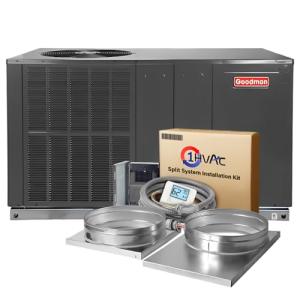
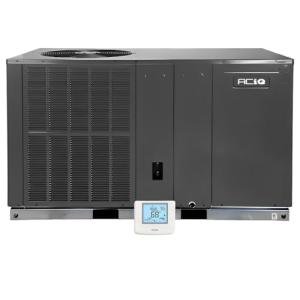
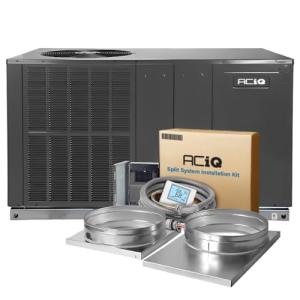
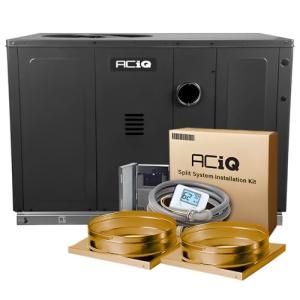
What Is a Packaged AC Unit?
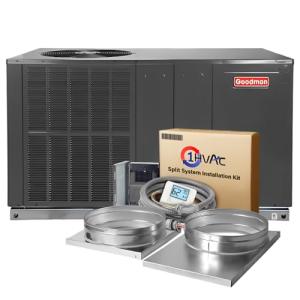
A packaged AC unit (also called an all-in-one system or self-contained unit) houses all the components of a traditional HVAC system inside a single outdoor cabinet. In a conventional split system, you'd have an indoor air handler or furnace connected to an outdoor condenser by refrigerant lines running through your home. With a packaged unit, that separation disappears.
Here's how it works in practice: return air from your home's ductwork enters the cabinet, passes over the evaporator coil where heat and humidity are removed, and then the cooled air gets pushed back into your supply ducts. The refrigerant carries that extracted heat out to the condenser section, where it's released to the outdoor air. The whole cycle happens in one compact box.
Packaged units connect to your home through duct openings in the foundation wall or a rooftop curb — making them especially well-suited to homes with a crawlspace, slab foundation, or flat commercial roof where running separate indoor equipment would be complicated or impractical.
Types of Packaged AC Units
Not every packaged unit is the same, and choosing the right type for your climate and energy needs makes a significant difference in comfort and long-term cost. Here's a breakdown of the main categories you'll encounter:
Packaged Air Conditioner (Cooling Only)
The most basic configuration: a packaged unit that provides cooling only, typically paired with separate electric heat strips for cold weather. These are a strong fit for warmer climates where winter heating demand is low. They're straightforward, cost-effective, and easy to maintain. If you live somewhere that rarely sees freezing temperatures, this type of system gives you reliable, efficient cooling without paying for heating features you'll rarely use.
Packaged Heat Pump Units
A packaged heat pump does double duty — cooling your home in summer and providing heat in winter by reversing the refrigerant cycle to pull warmth from outdoor air. Heat pumps are well-known for their efficiency, particularly in mild climates where temperatures don't regularly drop below freezing. Because they move heat rather than generate it, they can deliver more energy per unit of electricity than a traditional resistance heater. If your climate is moderate and your energy bills are a concern, a packaged heat pump is worth serious consideration.
Packaged Gas/Electric Units (Gas Packs)
Gas packs combine electric air conditioning with a gas furnace in a single cabinet. In warm weather, the electric AC runs like any other air conditioner. When cold weather hits, the gas furnace takes over to provide powerful, cost-effective heating. Gas packs are particularly popular in colder regions where electric heat strips just can't keep up and where gas remains an affordable fuel source. They offer a solid balance of cooling efficiency and serious heating muscle — a combination that works especially well in climates with real winters.
Dual Fuel Packaged Systems
Dual fuel systems are among the most versatile packaged units on the market. They pair a heat pump with a gas furnace and automatically switch between the two based on outdoor temperature. When it's mildly cold, the heat pump runs efficiently. When temperatures drop below the point where a heat pump becomes less effective, the gas furnace kicks in. The result is a system that always uses the most efficient heat source for the conditions. Dual fuel packaged systems work well in climates with variable winters — not always brutal, but cold enough that you need a reliable backup.
Key Benefits of Packaged AC Units
Space Savings
The most immediate advantage is what you gain indoors. With no air handler, furnace, or evaporator coil taking up closet space, attic room, or basement square footage, you free up that space for other purposes. For small homes, apartments, or commercial buildings where interior real estate is precious, this matters a great deal.
Simplified Installation
Because all the components arrive in one cabinet and the entire system connects through a single location, installation is generally faster and less labor-intensive than a split system. There's no need to run refrigerant lines through interior walls or find space for separate components in different parts of the building.
Easier Maintenance and Service
When something needs attention, the technician has one place to look. Most packaged units are designed with single-side service access, meaning your HVAC tech can inspect, clean, or repair the system without needing to move through your home or access multiple locations. This typically translates to faster service calls and lower labor costs over time.
Strong Performance for Retrofits
Older homes weren't always built with central HVAC systems in mind. If your home has a large duct opening through the foundation wall or was previously set up for a packaged unit, converting to a split system would mean significant structural changes. In these situations, a packaged unit is not just convenient — it's often the smartest practical choice.
Understanding Efficiency Ratings
If you've started shopping for packaged AC units, you've likely encountered efficiency rating terminology. Here's what actually matters:
SEER2 (Seasonal Energy Efficiency Ratio 2) measures how efficiently a cooling system performs over an entire season. The higher the SEER2 number, the less electricity the unit uses to produce the same amount of cooling. Think of it like miles per gallon for a car — higher is better, and the savings add up over time. As of 2023, packaged systems must meet minimum SEER2 standards to be sold in the U.S., with newer testing protocols that better reflect real-world duct pressures and installation conditions.
EER2 measures efficiency at a fixed set of peak conditions, giving you a snapshot of how the unit performs on the hottest days when demand is highest.
HSPF2 applies to heat pump systems and measures heating efficiency across a season.
For packaged units specifically, incentive programs in 2026 tend to favor systems reaching around 16 SEER2 and 11.5 EER2 or better. Higher-efficiency models may qualify for rebates or federal tax credits that can meaningfully offset the upfront cost premium. When budgeting, factor in not just the purchase price but the long-term energy savings — a more efficient unit typically pays back its premium within a few cooling seasons in high-use climates.
It's also worth noting that starting in 2026, most new packaged systems are designed to use lower-GWP (global warming potential) refrigerants such as R-32 or R-454B, replacing older R-410A systems. This is a regulatory shift driven by environmental standards, and it's reflected in newer product lines across all major brands.
Who Are Packaged AC Units Best For?
Packaged AC units are a smart fit in a number of scenarios:
Homeowners with slab or crawlspace foundations — where there's no attic or basement to house an indoor air handler, a packaged unit connecting through the foundation wall is often the most natural solution.
Older homes being retrofitted for central air — when a house wasn't built with space for indoor HVAC equipment, a packaged unit offers a path to central cooling and heating without major structural modifications.
Commercial properties with rooftop access — offices, retail stores, warehouses, and light industrial facilities frequently use rooftop packaged units. They keep all mechanical equipment off the floor, preserve interior space, and simplify service access. Commercial packaged units also integrate well with zoned controls, demand-controlled ventilation, and building automation systems.
Anyone who prefers all equipment outdoors — some homeowners simply want their HVAC system outside and out of sight, with no indoor mechanical components to deal with. Packaged units deliver exactly that.
What to Look For When Buying a Packaged AC Unit
Correct Sizing
Oversizing is one of the most common mistakes in HVAC purchasing. A unit that's too large will short-cycle — turning on and off frequently without completing a full run — which leads to poor humidity control, uneven temperatures, and unnecessary wear on the equipment. Always ask for a Manual J load calculation before selecting a unit size. This is a formal heat-load analysis based on your home's square footage, insulation, windows, climate, and other factors. Don't let anyone size your unit based on rules of thumb or square footage alone.
Efficiency Rating and Incentive Eligibility
Compare SEER2 ratings across models in your budget range. Check whether models you're considering qualify for utility rebates or federal tax credits — these can significantly change the real cost equation. Higher-efficiency models may carry a price premium of several hundred to over a thousand dollars, but the energy savings frequently justify that investment over the life of the unit.
Refrigerant Type
New packaged systems in 2026 increasingly use A2L refrigerants like R-32 or R-454B. Make sure your installer is trained and certified to work with these newer refrigerant types, as they require updated service procedures compared to older R-410A systems.
Warranty Coverage
Look for a minimum five-year compressor warranty and at least one to two years of coverage on parts and labor. Register your unit promptly after installation — many manufacturers require registration to activate full warranty coverage. Extended warranty options are available from many brands and are worth evaluating for commercial installations or high-use environments.
Brand and Service Network
Choose a brand with a strong local service network and readily available replacement parts. Even the best equipment eventually needs service, and being stuck waiting for parts from a brand with poor regional support can turn a minor repair into a major inconvenience.
Packaged Units vs. Split Systems: A Quick Reality Check
Packaged units aren't universally superior to split systems — they're the right tool for specific situations. Split systems generally offer a broader range of efficiency levels, more configuration options (including variable-speed compressors), and are often better protected from weather-related wear since the most sensitive components are indoors. They also tend to operate more quietly inside the home.
Packaged units win on simplicity, space savings, installation accessibility, and ease of service. For homes and buildings where a split system is impractical or where all-outdoor equipment is preferred, packaged units are hard to beat.
Maintenance Tips to Maximize Your Investment
Once you've installed a packaged AC unit, protecting that investment is straightforward:
- Replace or clean filters every one to three months, depending on usage and air quality conditions
- Keep the area around the unit clear of debris, vegetation, and obstructions to maintain proper airflow
- Rinse the exterior coils gently with water during routine maintenance
- Confirm the condensate drain is clear and flowing properly
- Schedule annual professional maintenance — studies suggest routine service can boost efficiency by around 15% and reduce repair costs significantly over the unit's lifespan
Packaged AC units offer a compelling combination of simplicity, versatility, and practicality that makes them the right choice for a wide range of homes and commercial buildings. Whether you're replacing an aging system, retrofitting an older home, or outfitting a commercial rooftop, the right packaged unit will deliver reliable comfort for years to come.