Energy Recovery Ventilators, or ERVs, are a game changer for keeping your indoor air fresh and comfortable without wasting energy. They pull in fresh outdoor air while removing stale air, so you get better ventilation without cranking up your energy bill. If you want to breathe easy and feel good in your home, these systems are a smart choice!
Energy Recovery Ventilators (ERV)
Breathe easier with top-notch energy recovery ventilators that save energy while enhancing indoor air quality
Product List
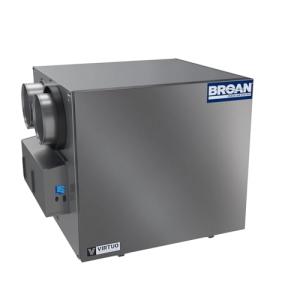
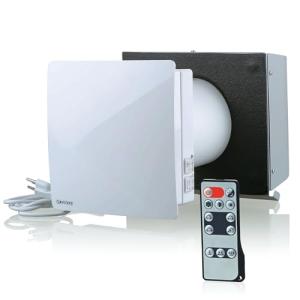
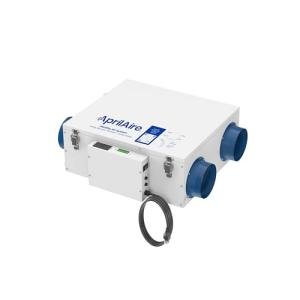
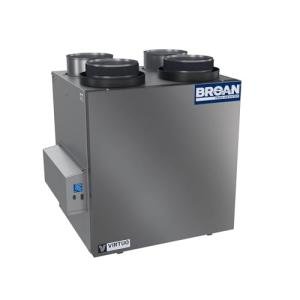
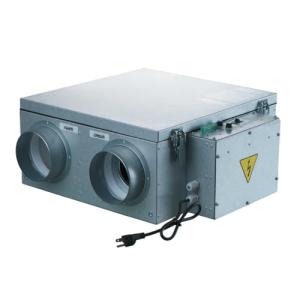
What Is an Energy Recovery Ventilator?
An Energy Recovery Ventilator is a mechanical ventilation device that continuously exchanges stale indoor air with fresh outdoor air — while transferring both heat and moisture between the two airstreams. Unlike simply cracking a window or running an exhaust fan, an ERV recovers the energy embedded in the outgoing air and uses it to pre-condition the incoming air, so your heating or cooling system doesn't have to work as hard.
The heart of every ERV is its enthalpy core — a specially engineered membrane or substrate through which both temperature and humidity pass between the exhaust and supply airstreams without the two ever physically mixing. In winter, the warm, humid indoor air heats and humidifies the cold incoming fresh air. In summer, the cool, dry indoor air cools and dehumidifies the hot, muggy outdoor air flowing in. The result is continuous ventilation with minimal energy penalty.
This distinguishes ERVs from their close relatives, Heat Recovery Ventilators (HRVs). HRVs transfer only heat, making them better suited to cold, dry climates where you want to expel excess indoor moisture. ERVs transfer both heat and moisture, making them the better choice in mixed, humid, or hot climates where maintaining balanced indoor humidity is a priority.
How Does an ERV Work?
The operating principle of an Energy Recovery Ventilator is straightforward, even if the engineering behind it is remarkably precise.
Two separate airstreams run through the unit simultaneously. One pulls stale, pollutant-laden air out of the building from areas like kitchens, bathrooms, laundry rooms, and utility spaces. The other draws fresh outdoor air in and distributes it to living areas, bedrooms, and workspaces. These two streams pass on opposite sides of the enthalpy core, which acts as the energy exchange medium.
Most residential and light-commercial ERVs use one of two core technologies:
Rotary wheel cores use a slowly rotating wheel coated with a desiccant material that absorbs and releases both heat and moisture as it turns between the two airstreams. Rotary cores typically achieve higher efficiency ratings and handle large airflow volumes well, making them popular in commercial applications.
Fixed-plate (counter-flow) cores use a stationary membrane, usually made from specially treated paper, polymer, or aluminum. The two airstreams pass in opposite directions through alternating channels. Fixed-plate cores have no moving parts in the heat exchange element itself, which can mean lower long-term maintenance needs and quieter operation.
Both core types are measured by their sensible recovery efficiency (how well they recover heat) and their latent recovery efficiency (how well they recover moisture). Premium ERV units in this category routinely achieve 70–85% total energy recovery under standard testing conditions.
Who Needs an Energy Recovery Ventilator?
ERVs aren't a niche product anymore. As building codes tighten and energy standards rise, mechanical ventilation has become a necessity rather than an upgrade in many parts of the world. Here are the situations where an ERV makes the most sense.
New construction and air-sealed renovations. If your home was built or retrofitted to meet modern energy codes — think spray foam insulation, triple-pane windows, and airtight vapor barriers — natural air infiltration has been designed out of the building. That's great for energy bills, but it means you need a deliberate, controlled ventilation strategy. An ERV provides exactly that.
Homes and buildings in humid climates. In regions where summer humidity is high, simply venting outdoor air inside will spike indoor humidity, strain air conditioners, and encourage mold growth. An ERV's latent recovery capability pre-dehumidifies incoming air using the already-conditioned indoor air, dramatically reducing the load on your AC system.
Allergy and asthma sufferers. Many ERV systems pair naturally with HEPA or electrostatic filtration, catching pollen, dust, pet dander, and particulates before they enter living spaces. Since the ERV is constantly diluting indoor air with filtered fresh air, CO₂, volatile organic compounds (VOCs), and off-gassing from furniture or building materials are continually flushed out.
Commercial spaces with high occupancy. Offices, schools, gyms, medical facilities, and restaurants generate significant CO₂ and odors from occupants. An ERV sized correctly for the space maintains CO₂ below 1,000 ppm (the threshold above which cognitive performance starts to decline), without blowing the HVAC budget.
Green building certifications. LEED, WELL Building Standard, Passive House (Passivhaus), and ENERGY STAR certifications all have ventilation requirements that ERVs help fulfill. If you're pursuing any certification for a residential or commercial project, an ERV is almost always part of the compliance pathway.
Key Features to Look for When Buying an ERV
Not all ERV units are created equal. When comparing products in this category, pay attention to these specifications and features.
Recovery efficiency ratings. Look for Certified Home Ventilating Institute (HVI) or equivalent certification. Sensible recovery efficiency tells you how well heat is transferred. Latent recovery efficiency covers moisture. Total energy recovery efficiency combines both. For most climates, prioritize units with total energy recovery above 70%.
Airflow capacity (CFM). Cubic feet per minute ratings tell you how much air the unit can move. Residential units typically range from 40 CFM to 200+ CFM. To size correctly, you generally target 0.35 air changes per hour throughout the entire conditioned space, or follow ASHRAE 62.2 ventilation rate guidelines. Undersizing leads to poor air quality; oversizing wastes energy and may over-ventilate.
Static pressure performance. This matters when the ERV is connected to ductwork. Higher static pressure capability means the unit can push air through longer duct runs and more complex distribution systems without losing airflow. Always check the unit's performance curve at your expected system static pressure, not just its rated CFM at zero static pressure.
Defrost capability. In cold climates, incoming outdoor air can freeze condensation inside the core. Quality ERVs include automatic defrost cycles — either by temporarily recirculating indoor air or by using supplemental heat — to prevent ice buildup that degrades performance and can damage the core.
Filtration. Basic units include simple mesh pre-filters. Better units integrate MERV-8 or MERV-13 filters on both the intake and exhaust sides. Some premium models accommodate HEPA filtration. Higher MERV ratings capture finer particles but also increase static pressure, so balance filtration quality against fan capacity.
Controls and smart integration. Modern ERVs increasingly support demand-controlled ventilation through CO₂ or humidity sensors, adjusting airflow automatically based on actual indoor conditions rather than running at a fixed rate. Integration with smart home systems, building automation platforms, and apps is available across mid-range and premium product lines.
Noise levels. Sone ratings matter, especially for residential installations where the unit may be installed near living areas. Look for units rated at 1.5 sones or below at typical operating speeds for quiet background operation.
ERV Installation: Ducted vs. Decentralized Systems
ERVs come in two primary installation configurations.
Ducted central ERVs connect to dedicated ventilation ductwork or, in some cases, to an existing forced-air HVAC system. A single central unit serves the entire building, with supply and exhaust registers distributed throughout. This is the most common approach for new construction and whole-house retrofits. It provides the most even air distribution and is typically the most energy-efficient configuration.
Decentralized (wall-mounted) ERVs are single-room or zone units that mount directly through an exterior wall without ductwork. They're an excellent solution for retrofitting individual rooms in existing homes, adding ventilation to room additions, or supplementing central systems in specific areas. Decentralized units are generally easier to install but less effective at distributing fresh air evenly across an entire building.
For most residential applications, a professional HVAC contractor should perform load calculations, duct design, and installation to ensure the system meets ventilation standards and performs as specified. Commercial installations should involve a mechanical engineer for proper sizing and system integration.
Energy Savings and Return on Investment
The energy savings argument for ERVs is compelling, though the actual numbers depend on climate, building size, energy prices, and baseline ventilation practices.
In a typical 2,000-square-foot home in a mixed climate, replacing passive exhaust ventilation (like bathroom fans running continuously) with an ERV can reduce HVAC energy consumption related to ventilation by 50–80%. That's because instead of dumping conditioned air directly outside and pulling raw outdoor air in through leaks and gaps, the ERV pre-conditions nearly all incoming air using energy that would otherwise be discarded.
In commercial buildings where ventilation rates are high and buildings operate long hours, the ROI calculation is even more favorable. Large rooftop ERV units on commercial buildings commonly achieve payback periods of 3–7 years based on energy savings alone, not counting improved occupant productivity and health outcomes tied to better indoor air quality.
Maintenance Requirements
ERVs are low-maintenance systems, but they do require periodic attention to perform well over their service life.
Filter cleaning or replacement is the most frequent task, typically every 3–6 months depending on outdoor air quality and occupancy. Clogged filters reduce airflow, decrease recovery efficiency, and put unnecessary strain on fans.
Core cleaning should be performed annually or per manufacturer guidance. Fixed-plate cores can often be removed and rinsed with mild detergent and water. Rotary wheel cores require more careful cleaning to avoid damaging the desiccant coating.
Fan and motor inspection, drain pan cleaning (on units with condensate drainage), and duct inspection for blockages or leaks round out a typical annual maintenance routine. Many manufacturers offer service kits with replacement filters and cleaning instructions.
Choosing the Right ERV for Your Application
The right ERV depends on your specific situation, but here's a practical framework.
For tight, modern homes in mixed or humid climates, look for a ducted whole-house ERV with HVI certification, a total energy recovery efficiency above 75%, and integrated humidity-based controls.
For older homes being incrementally improved, a decentralized wall-mounted ERV in high-traffic or high-humidity rooms offers a practical starting point without requiring full duct installation.
For commercial projects, work with a mechanical engineer to specify rooftop or air-handling unit-integrated ERV cores sized to meet ASHRAE 62.1 ventilation rates, with demand-controlled ventilation sensors and building automation integration.
For cold climate applications, prioritize defrost performance and consider whether an HRV might be more appropriate if indoor humidity is chronically high in winter rather than low.
Browse our full selection of Energy Recovery Ventilators below to compare specifications, certifications, and price points across residential, light-commercial, and commercial product lines.