Exhaust fans are a game changer for keeping your spaces fresh and comfortable. They help remove stale air, moisture, and odors, making a noticeable difference in kitchens, bathrooms, and basements. Plus, they can improve your home's air quality, so you breathe easier every day.
Exhaust Fans
Keep your space fresh and comfortable with our energy-efficient exhaust fans designed for every need
Product List
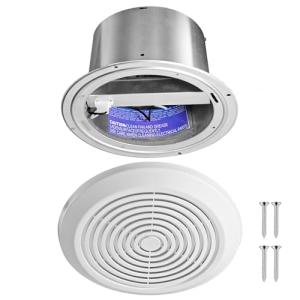
What Is an Exhaust Fan and Why Do You Need One?
An exhaust fan is a ventilation device that pulls stale, humid, or contaminated air out of a room and pushes it outside your home. Unlike a ceiling fan that simply circulates air around the room, an exhaust fan actually removes air — taking moisture, odours, pollutants, and heat with it.
In a bathroom, this is critical. Every time someone showers or runs a bath, litres of water evaporate into the air. Without somewhere to go, that moisture settles on walls, ceilings, mirrors, and grout. Over time, it causes mould growth, paint peeling, and structural damage to timber and plaster. A good exhaust fan removes that moisture before it becomes a problem.
In a kitchen, cooking generates grease particles, carbon monoxide from gas burners, steam, and strong odours. A range hood or kitchen exhaust fan captures these at the source and vents them outside, keeping your air cleaner and your cabinetry free from greasy build-up.
In a laundry room, workshop, or garage, exhaust fans remove chemical fumes, lint particles, and humidity that would otherwise settle into every corner of the space.
Simply put: if a room generates moisture, heat, odours, or airborne pollutants, it benefits from an exhaust fan.
Types of Exhaust Fans
Not all exhaust fans are the same. Understanding the different types helps you choose the right one for your space.
Ceiling-Mounted Exhaust Fans
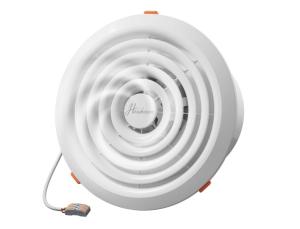
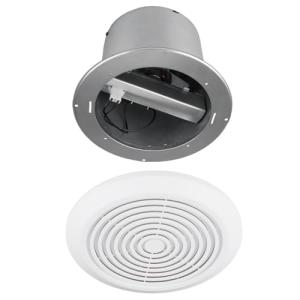
The most common type, these are installed directly in the ceiling and duct through the roof or wall to the outside. They're ideal for bathrooms, laundries, and smaller utility rooms. Ceiling-mounted fans are discreet, relatively quiet when you choose a quality model, and effective at pulling humid air upward and out.
Wall-Mounted Exhaust Fans
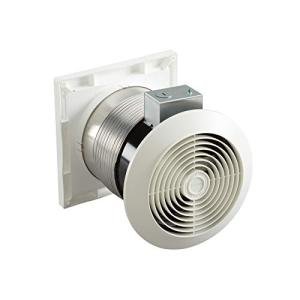
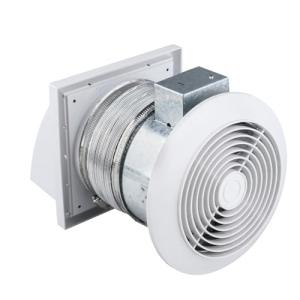
When ceiling ducting isn't practical — in basements, ground-floor rooms, or spaces with limited ceiling access — wall-mounted fans are the solution. They sit flush against an exterior wall and push air directly outside. Wall fans are also popular in garages and workshops where large volumes of air need to be moved quickly.
Inline Exhaust Fans
Inline fans are installed within the ductwork itself, rather than at the ceiling or wall opening. Because the fan motor is located away from the room, they tend to be significantly quieter at the point of use. They're a great choice for master bathrooms, home theatres, or bedrooms where noise is a concern. They can also serve multiple rooms from a single unit when connected to branched ductwork.
Range Hoods and Kitchen Exhaust Fans
Kitchen ventilation deserves its own category. Range hoods combine an exhaust fan with lighting and a grease filter, sitting directly above your cooktop. They come in three main styles: ducted (venting outside), recirculating (filtering air and returning it to the room), and convertible (capable of both). Ducted range hoods are far more effective at removing heat, moisture, and fumes, while recirculating models work in apartments or spaces where external ducting isn't possible.
Whole-House Ventilation Fans
For homes with persistent air quality issues, a whole-house fan draws fresh air in through open windows and exhausts stale air through the roof. These are not typical room exhaust fans — they're large, powerful units designed to replace the air in an entire home multiple times per hour. They're popular in climates where evenings are cool, as they can flush out daytime heat efficiently.
Key Features to Look For
Shopping for an exhaust fan involves more than comparing prices. Here are the features that actually make a difference to performance and satisfaction.
Airflow Capacity (CFM)
CFM stands for cubic feet per minute, and it tells you how much air the fan can move. As a general rule, your bathroom fan should be able to move at least 1 CFM for every square foot of floor space. So a 60-square-foot bathroom needs at least a 60 CFM fan. For kitchens, the calculation is different — range hoods are typically rated for much higher airflow, and the recommendation is based on your cooktop's BTU output.
Don't assume bigger is always better. An oversized exhaust fan can create negative pressure issues or become unnecessarily noisy. Match the CFM to your room size.
Noise Level (Sone Rating)
Fan noise is measured in sones. A fan rated at 0.3–1.0 sones is whisper-quiet, barely audible over normal background noise. A fan rated at 3–4 sones is noticeably loud and can feel intrusive in a quiet bathroom or bedroom. For residential use, look for fans under 1.5 sones whenever possible. For kitchens, noise is less critical since cooking itself generates sound.
Energy Efficiency
Modern exhaust fans use DC motors and LED lighting, drawing far less power than older models. Many are ENERGY STAR certified, meaning they've been independently tested for efficiency. An efficient fan not only costs less to run but also tends to have a longer motor life.
Humidity and Motion Sensors
Smart exhaust fans include built-in humidity sensors that automatically switch the fan on when moisture levels rise above a set threshold, and off again once the air returns to normal. This is especially useful in bathrooms — the fan runs exactly as long as it needs to, without relying on someone remembering to turn it on or off.
Motion sensors are another convenient feature, turning the fan on when someone enters the room and off after a set delay once they leave. Some fans combine both humidity and motion sensors for maximum convenience.
Integrated Lighting
Many ceiling exhaust fans include built-in LED lighting, combining two fixtures into one. This is a practical choice for smaller bathrooms where ceiling space is limited. Look for fans with adjustable colour temperature (warm vs. cool white) or dimmable LEDs if ambiance matters to you.
Heat Lamp Combination Units
In cold climates, bathroom combination units that include an exhaust fan, light, and heat lamp are a popular choice. These three-in-one fixtures provide warmth immediately after stepping out of the shower, without the delay of waiting for a central heating system to kick in.
How to Choose the Right Exhaust Fan for Each Room
Bathroom Exhaust Fans
For the bathroom, prioritise low noise, adequate CFM for your room size, and humidity sensor functionality. If your bathroom has a separate toilet compartment, consider installing a second, smaller fan specifically for that area. Look for models with back-draught dampers, which prevent cold air from flowing back through the duct when the fan isn't running.
Kitchen Exhaust Fans and Range Hoods
In the kitchen, CFM is king. Gas cooktops produce more heat and combustion byproducts than electric, so they need more powerful ventilation. A wide cooktop needs a wider hood to capture the full cooking area. If you're going ducted, keep your duct run as short and straight as possible — every bend reduces efficiency. For recirculating hoods, choose models with activated carbon filters and replace them regularly.
Laundry Room Exhaust Fans
Laundry rooms generate a surprising amount of moisture and lint. A wall-mounted fan with a timer is often the most practical solution here. If you're also venting a dryer, that requires a completely separate duct and vent — don't combine it with your exhaust fan ductwork.
Garage and Workshop Exhaust Fans
Garages and workshops need serious airflow, particularly if you're working with paints, solvents, or running an engine. Wall-mounted industrial fans or high-CFM window fans are appropriate for these spaces. Always choose a fan rated for the type of environment — look for explosion-proof ratings if you're dealing with flammable vapours.
Installation Considerations
Most exhaust fans are within the ability of a confident DIYer to install, but there are a few things to keep in mind before you start.
Ducting matters enormously. The fan itself can be excellent, but if the duct run is too long, too narrow, or full of unnecessary bends, airflow will be dramatically reduced. Use the largest duct diameter the fan supports, minimise bends, and always vent to the outside — not into a ceiling cavity or roof space, which simply moves the moisture problem rather than solving it.
Electrical connections should be handled carefully and in compliance with local regulations. In many regions, new bathroom electrical work requires a licensed electrician.
The exterior vent cover needs to be weather-resistant and fitted with a backdraft damper to keep insects and cold air out.
Maintenance Tips for Long-Lasting Performance
An exhaust fan that isn't maintained gradually loses effectiveness as dust and grime clog the grille and impeller blades. Every three to six months, remove the cover and clean it with warm soapy water. Use a vacuum with a brush attachment to clean the fan blades and motor housing. Check that the exterior vent flap opens and closes freely.
If your fan starts making unusual noises, the bearings may be wearing out. Many fans allow you to replace the motor assembly without replacing the entire unit, which is a cost-effective fix.
Exhaust Fans and Indoor Air Quality
Beyond comfort, exhaust fans play a genuine role in protecting the health of your household. Indoor air can be two to five times more polluted than outdoor air, largely because modern homes are well-sealed and moisture, cooking byproducts, cleaning chemicals, and off-gassing from building materials accumulate without adequate ventilation.
Running your bathroom fan for at least 20 minutes after a shower, operating your range hood every time you cook, and ensuring utility rooms have adequate airflow are simple habits that make a measurable difference to the air you breathe every day.
Finding the Right Exhaust Fan
The right exhaust fan balances airflow capacity, noise level, energy efficiency, and smart features for your specific room and lifestyle. Whether you're upgrading an ageing bathroom fan that sounds like a small aircraft, fitting out a new kitchen with proper ventilation, or solving a persistent dampness problem in a laundry room, there's an exhaust fan designed to do exactly that job quietly, efficiently, and reliably.