Mini-split systems are a great way to keep your home comfortable without the hassle of ductwork. They’re super efficient and allow you to control the temperature in different rooms independently, which means you can save on energy costs. Plus, their sleek design fits right into any space, making them a stylish choice for heating and cooling.
Mini-Split Systems
Efficient cooling and heating without the fuss of traditional units
Product List
What Is a Mini-Split System?
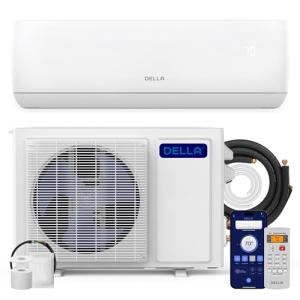
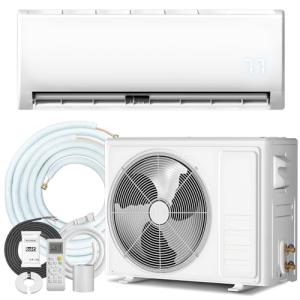
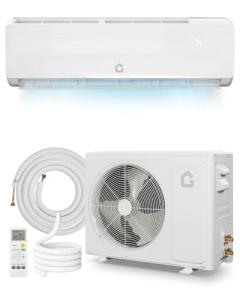
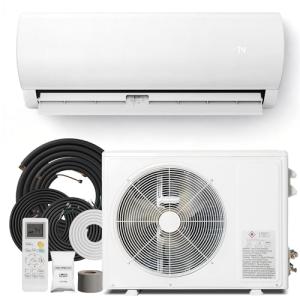
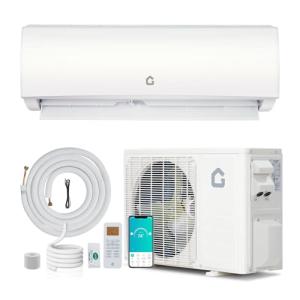
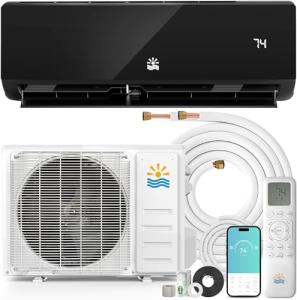
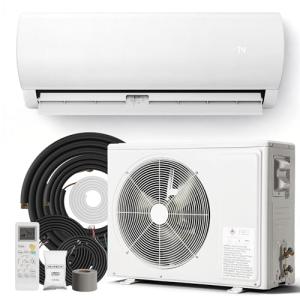
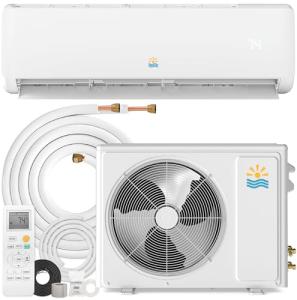
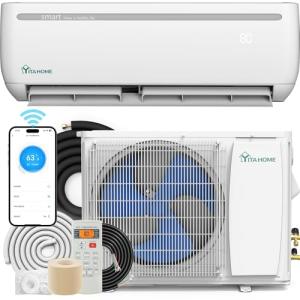
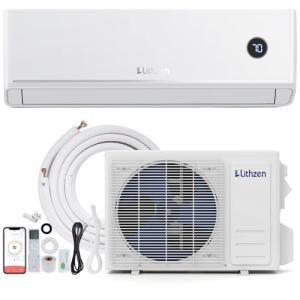
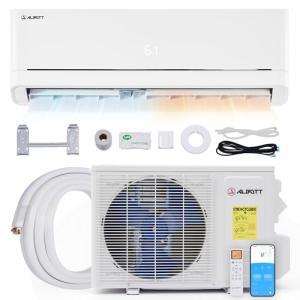
A mini-split system — sometimes called a ductless mini-split or ductless heat pump — is a two-part heating and cooling system that works without the need for ductwork. It consists of an outdoor compressor/condenser unit and one or more indoor air-handling units, connected by a small conduit that carries refrigerant lines, power cables, and a condensate drain.
That conduit typically requires only a 3-inch hole through your wall. No major construction. No months of HVAC renovation. Just a relatively clean installation that can be up and running in a day or two.
The indoor unit mounts on the wall, ceiling, or floor depending on the model, and delivers conditioned air directly into the room. You control it with a remote, a wall thermostat, or increasingly, a smartphone app. The outdoor unit handles the refrigerant cycle, quietly doing the heavy lifting from outside.
How Mini-Split Systems Work
Mini-splits operate on the same refrigerant cycle as any air conditioner or heat pump — but without the energy losses that come with pushing air through hundreds of feet of ductwork.
Here's the basic flow: the indoor unit pulls warm room air across a refrigerant coil. In cooling mode, that refrigerant absorbs the heat and carries it outside, where the outdoor unit releases it. The cooled air returns to the room. In heating mode, the process reverses — the system extracts heat energy from outdoor air (even in cold temperatures) and delivers it inside.
Because they don't rely on ducts, mini-splits avoid the efficiency losses that plague central systems. Duct leakage in a typical home can account for 20–30% of energy waste. Mini-splits sidestep that problem entirely.
Modern mini-split systems also use inverter-driven compressors, which vary their speed continuously rather than cycling on and off like older systems. This means they maintain a steadier temperature, consume less electricity, and experience less mechanical wear over time.
Single-Zone vs. Multi-Zone Mini-Split Systems
One of the biggest decisions you'll make when shopping for a mini-split is whether you need a single-zone or multi-zone setup.
Single-Zone Systems
A single-zone mini-split connects one outdoor unit to one indoor unit. It's the most common setup for:
- Additions and sunrooms that aren't connected to central HVAC
- Garages converted into living or working spaces
- Bedrooms with specific temperature preferences
- Server rooms, workshops, or home gyms
- Apartments and condos with no existing ductwork
Single-zone systems are simple, affordable, and highly effective. If you have one problem space, this is usually the right answer.
Multi-Zone Systems
A multi-zone mini-split connects one outdoor unit to multiple indoor units — typically two to eight, depending on the system. Each indoor unit operates independently, so different rooms can be set to different temperatures simultaneously.
This is an excellent solution for:
- Whole-home heating and cooling in homes without ducts
- New construction where installing ductwork isn't practical
- Older homes where retrofitting ducts would be too disruptive or expensive
- Spaces with dramatically different heating and cooling needs (south-facing rooms vs. north-facing rooms, for example)
Multi-zone systems require careful load calculation to ensure the outdoor unit is properly sized for the combined demand of all indoor units.
Types of Indoor Units
Mini-split indoor units come in several configurations, each suited to different installation scenarios and aesthetic preferences.
Wall-Mounted Units are the most common type. They mount high on the wall, distribute air across the room from above, and are available in a wide range of capacities. They're the go-to choice for most residential installations.
Ceiling Cassette Units sit flush in a drop ceiling and distribute air in four directions. These are popular in commercial spaces, open floor plans, and rooms where you don't want a visible wall unit.
Floor-Mounted Units install near the floor and work particularly well in rooms with large windows or sloped ceilings where wall space is limited. They're also a good match for spaces where occupants want to feel warm air rising from below, similar to the sensation of baseboard heating.
Ceiling-Suspended Units hang from the ceiling and work well in spaces with high ceilings or where wall installation isn't feasible.
Concealed Duct Units are a hybrid approach — they use a short section of ductwork to distribute air from a hidden air handler. This gives you the aesthetics of invisible HVAC with the efficiency of a mini-split refrigerant system.
Energy Efficiency: What the Numbers Mean
When you're comparing mini-split systems, you'll encounter several efficiency ratings. Understanding them helps you make a smarter purchase.
SEER2 (Seasonal Energy Efficiency Ratio 2) measures cooling efficiency over a full season. Higher is better. Many mini-splits achieve SEER2 ratings of 18 to 30 or more, significantly outperforming most central AC systems.
HSPF2 (Heating Seasonal Performance Factor 2) measures heating efficiency. A higher number means the system extracts more heat energy per unit of electricity consumed.
COP (Coefficient of Performance) is a snapshot efficiency measurement — a COP of 3.0 means the system delivers three units of heat energy for every one unit of electrical energy consumed. Mini-splits frequently achieve COPs well above 2.0 even in cold climates.
Many mini-split systems qualify for ENERGY STAR certification, and some may be eligible for federal tax credits or local utility rebates. It's worth checking programs in your area before you buy — the savings can be meaningful.
Cold-Climate Performance
One question that comes up often is how mini-splits perform in cold weather. Early ductless systems had real limitations below freezing. Modern units — particularly those marketed as cold-climate heat pumps or hyper heat systems — have addressed this dramatically.
Many current mini-splits maintain full or near-full heating capacity at outdoor temperatures as low as 5°F (-15°C), and can continue to extract heat from the air at temperatures as low as -13°F (-25°C). If you live in a northern climate and are considering a mini-split as a primary heat source, look specifically for models rated for cold-climate operation and check the manufacturer's heating capacity data at low outdoor temperatures.
For homes in very cold regions, a mini-split paired with a backup heat source — electric baseboard, propane, or even a wood stove — provides both efficiency and peace of mind.
Installation Considerations
Mini-split installation is not a DIY project in most cases. The refrigerant lines must be handled by an EPA 608-certified technician, and proper sizing requires a Manual J load calculation to ensure the system is neither too large nor too small for the space.
That said, the installation is far less invasive than traditional HVAC work. A typical single-zone installation takes one to two days. Multi-zone systems may take longer, but nothing close to the weeks required for a full duct system retrofit.
Key installation factors include:
- Location of the outdoor unit: It needs adequate airflow and should be placed away from areas where snow can pile up or where noise would be disruptive.
- Refrigerant line length: Longer line runs can affect efficiency and require specific refrigerant charges.
- Electrical requirements: Most mini-splits require a dedicated circuit. Your electrician will need to confirm your panel can support it.
- Indoor unit placement: The unit should be positioned to distribute air evenly throughout the room without blowing directly on occupants.
Maintenance and Long-Term Care
Mini-split systems are relatively low-maintenance compared to central HVAC systems, but they're not maintenance-free.
Filter cleaning is the most important routine task. Most indoor units have washable filters that should be cleaned every two to four weeks during heavy use. Clogged filters reduce airflow, hurt efficiency, and can damage the unit over time.
Annual professional service is worth scheduling. A technician can check refrigerant levels, clean the coils, inspect electrical connections, and ensure the condensate drain is clear. Catching small issues early prevents expensive repairs later.
Outdoor unit care is straightforward — keep the area around it clear of debris, vegetation, and snow. Don't block the airflow, and don't let ice build up without allowing the defrost cycle to do its job.
With proper care, a quality mini-split system can provide 15 to 20 years of reliable service.
Who Should Consider a Mini-Split System?
Mini-splits aren't for everyone, but they're the right answer for a wide range of situations.
You're a strong candidate if you're dealing with spaces that can't easily connect to central ductwork — additions, detached garages, finished basements, or attic conversions. They're also a smart choice if your existing central system struggles to maintain comfortable temperatures in specific rooms, and you'd rather not re-engineer your whole HVAC setup.
For homeowners interested in reducing energy bills, a mini-split running in zones you actually use can save significantly compared to conditioning an entire house 24/7. And for anyone building new or undertaking a full renovation, choosing mini-splits from the start eliminates the need for ductwork entirely — freeing up ceiling space, reducing construction costs, and delivering a more efficient outcome.
Commercial users will find mini-splits well-suited to offices, retail spaces, server rooms, restaurants, and any environment where different zones have different climate needs throughout the day.
Choosing the Right System
When you're ready to select a mini-split, focus on these key factors:
Capacity (BTUs): Bigger isn't automatically better. An oversized unit will short-cycle, leading to humidity problems and mechanical stress. Work with a professional to size your system correctly.
Brand and warranty: Established manufacturers back their products with meaningful warranties — often five to twelve years on compressors and parts. Don't cut corners here; this is long-term equipment.
Efficiency ratings: Compare SEER2 and HSPF2 numbers side by side, especially if you plan to run the system year-round. The efficiency premium on a better-rated unit often pays back in utility savings within a few years.
Smart controls: Many modern mini-splits offer Wi-Fi connectivity and app control, which makes it easy to manage temperatures remotely and set schedules. Some integrate with smart home platforms like Google Home or Amazon Alexa.
Noise levels: Look at both indoor and outdoor sound ratings. Good mini-splits operate quietly — indoor units often run at 19 to 26 dB on low fan speeds, which is barely audible.
Mini-split systems represent one of the most significant advances in residential and commercial HVAC technology in recent decades. They deliver precise, efficient, quiet climate control without the constraints of ductwork — and they do it in a package that's far more flexible and adaptable than anything traditional forced-air systems can offer.
Whether you need to tame one stubborn room or climate-control an entire home without touching a single duct, there's a mini-split configuration designed for exactly that. The technology has matured, the efficiency numbers are impressive, and the installation is cleaner than most homeowners expect.
Browse the mini-split systems in this category to find single-zone and multi-zone options across a full range of capacities, efficiency ratings, and indoor unit styles — all from manufacturers with proven track records in residential and commercial HVAC.